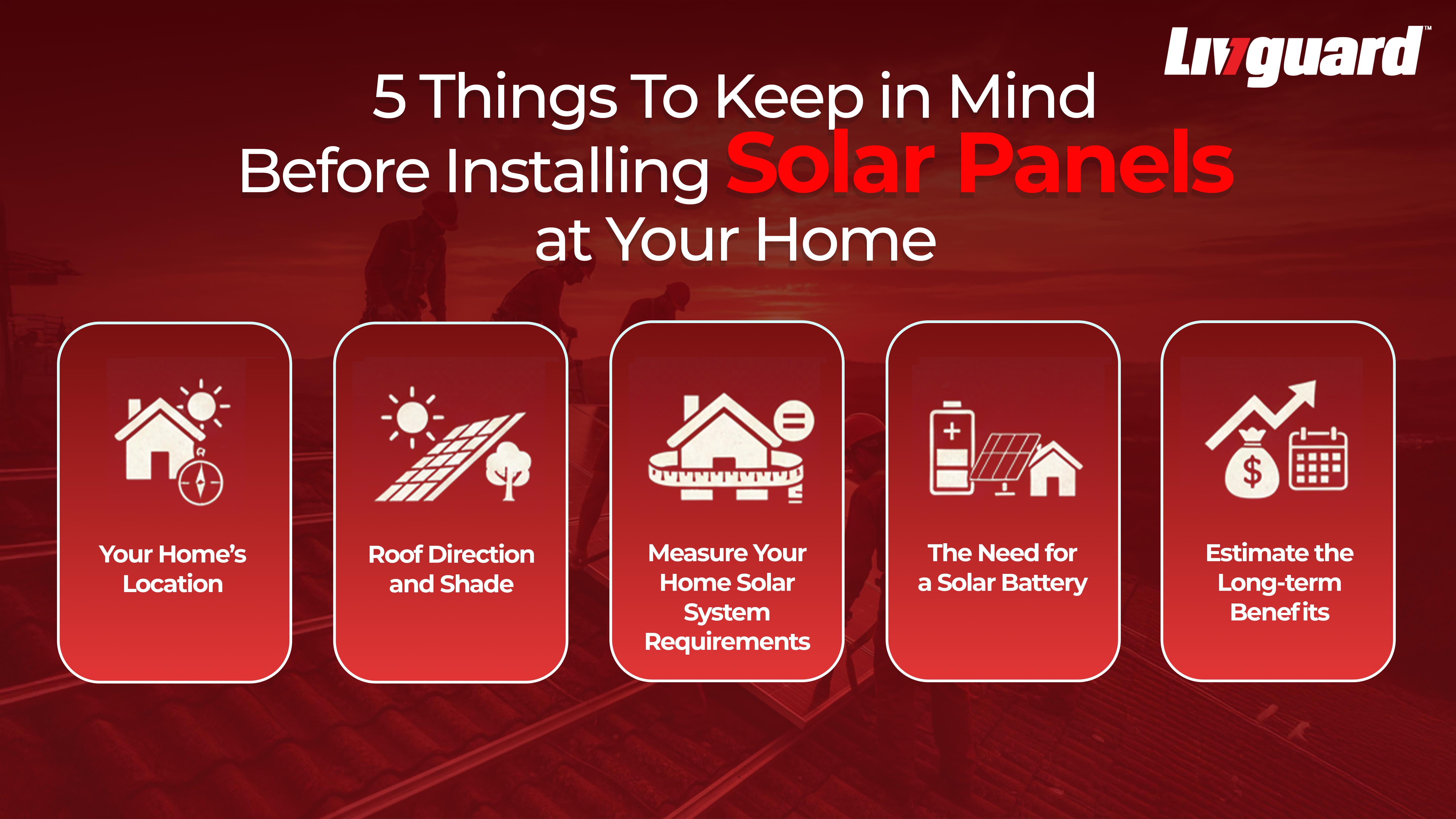
5 Things To Keep in Mind Before Installing Solar Panels at Your Home
| Sr. No. | Table of Contents |
|---|---|
| 1 | Why Solar Panels Matter |
| 2 | TThings to Know Before Installing Solar Panels |
| 3 | Additional Factors to Consider Before Installation |
| 4 | Conclusion |
Solar power is becoming a common choice. Many are now installing solar panels to reduce electricity bills and enjoy clean energy. But there is one question: What should you check before installing solar panels?
The answer is simple. A few important factors decide how well your home solar system guide will work. These include your roof direction, your home’s location and many more. Understanding these helps you choose the right system and get the best results.
Let’s explore the solar panel installation guide.
Read on to know the details of:
- Why a solar battery is important
- How Livguard Solar products help you build a complete and reliable home solar solution
Why Solar Panels Matter
Solar panels are clean, renewable and cost-effective. It helps you manage monthly bills and makes your home use good energy. But to get these benefits, you must choose the right one.
Things to Know Before Installing Solar Panels
These are the things to know before going solar:
1. Your Home’s Location
It’s a no-brainer that the more your solar panels are exposed to sunlight, the more energy they’ll be able to produce. That’s why the geographical location of your home plays a major role in determining the efficiency of your solar power panels.
Your home’s location directly affects how much sunlight the panels get. Areas with strong sunlight get better performance and it saves more.
If your house is in a region with cloudy days, you may need a larger system. This is why location is always included in the rooftop solar installation checklist.
2. Roof Direction and Shade
The best thing about solar panels is that they’re very durable. A quality system purchased from an authentic solar panel company can easily last for thirty years or even more. However, you must make sure that your roofs are:
- In good condition because repairing it later requires removing the panels, which can be costly.
- Faces a direction that gets good sunlight and has no shade from trees or nearby structures.
- Check the roof material and layout. It is important as some surfaces may need extra work or cost more.
- There is enough clear space on the roof for the number of panels you plan to install.
Following these tips for solar power setup for home can help you get the best results.
3. Measure Your Home Solar System Requirements
Before choosing a system, understand how much electricity your home uses every month. This helps you select the right solar system size.
You can check:
- Old electricity bills
- Your daily usage
- Appliances you use
This step gives you a clear idea of how much you can save every month. Measuring energy needs is one of the most important home solar installation tips. It makes sure your solar panel buying guide is clearer and helps you buy the right panels and inverter.
4. The Need for a Solar Battery
A solar battery is helpful because it stores extra power made during the day.
A battery:
- Gives backup during power cuts
- Reduces dependence on the grid
- Helps you use more of your own solar energy
- Supports long-term system performance
Livguard solar batteries are designed for fast charging, strong backup and long life. They help you build a complete and reliable system.
5. Estimate the Long-term Benefits
Solar is a long-term investment. Panels last 25+ years and need very little maintenance. Over the years, you save a lot on electricity bills and protect yourself from future price hikes.
A good brand-backed system also increases your property value and assures stable performance. By choosing the right panels, inverter and battery, you get better returns for many years.
Additional Factors to Consider Before Installation
Consider these home solar installation tips:
1. Panel Options
When it comes to solar panels, you can choose from varying panels like roof-mounted panels and ground-mounted panels. While the former is the most common and popular choice out there, the latter also provides some unparalleled benefits that make them an appealing option.
You can choose between:
- Roof-mounted panels
- Ground-mounted panels
- Solar shingles
Ground-mounted systems cost more because they need extra material and labour. Tracking mounts that follow the sunlight produce more power but are expensive. Always ask your manufacturer about panel efficiency, design and durability.
2. Available Financing Options
Solar installation can be costly, but many payment options make it easier:
- Solar loans: Pay small monthly instalments
- Leasing: Pay a small monthly fee to use the system
- Power Purchase Agreements (PPA): Buy electricity at a reduced rate
These options make solar more affordable, but you may not get tax benefits if you don’t own the system.
3. Tax Credits or Rebate Eligibility
Tax credits and rebates can bring down your installation cost. To get these, you may need to buy from approved companies and finish paperwork on time.
The Federal Residential Renewable Energy Tax Credit allows you to claim 30% of your system cost. Some states also offer extra rebates. Always ask your solar provider about available schemes to maximise savings.
Conclusion
Understanding the solar panel installation guide is important for you. Before installing solar panels, understand your home’s needs and check all important factors. A well-planned system gives better performance and higher savings.
With Livguard’s high-quality solar solutions, you can enjoy strong performance, stable power and long-term savings. A good home solar system requires your home to be energy-efficient, future-ready and valuable.