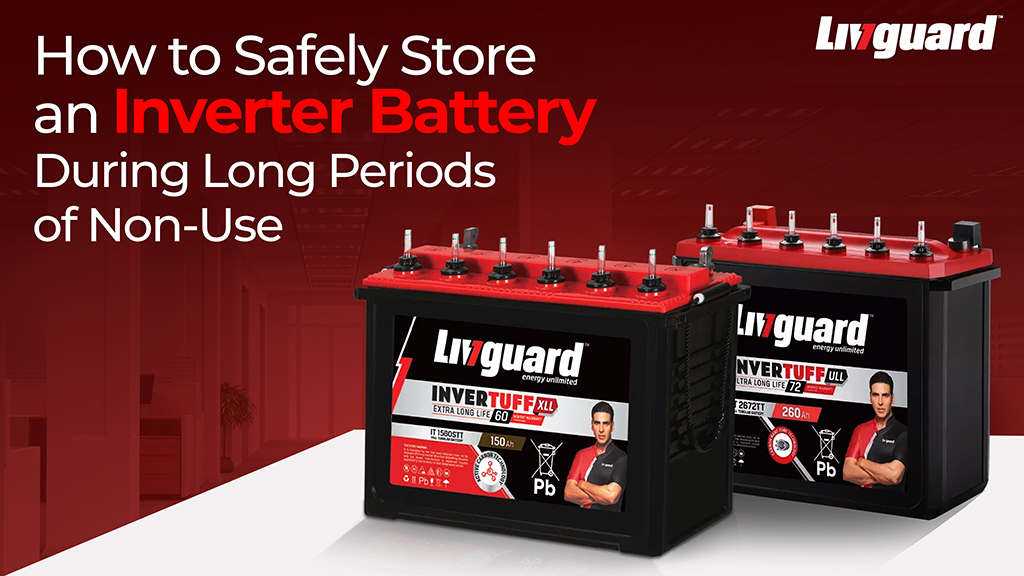
How to Safely Store an Inverter Battery During Long Periods of Non-Use
You’re not using your inverter for a while. Maybe you’ll go on a trip, or maybe you’re going to relocate. Whatever the reason might be, you need to remember one thing: how to store your inverter batteries in a safe way. This is because unsafe storage can damage the battery, causing electrolyte leakage and other accidents in your absence as well.
If you follow the correct inverter storage practices properly, you will preserve your battery’s life while keeping your battery safe. You will also make sure its capacity remains unharmed. So, let’s learn the important aspects.
Why Proper Storage Matters
Now the question is, why does proper storage matter so much in the first place? Well, if you store your battery properly, you prevent the loss of storage capacity, as batteries tend to lose their charging capacity as time goes on. This is because of a deep discharge, so next time you use your inverter and battery, you will lose a good chunk of power in the battery. All of this can be prevented with battery discharge prevention or, in turn, Good inverter battery storage practices.
Fully Charge Before Storage
Firstly, make sure your battery is fully charged before storing. This is because if you store your battery without charging it, the inverter discharge is going to decrease your battery’s lifespan significantly. That’s because when your battery is not charged all the way, the electrolytes degrade. For a long battery life of an inverter, you need to charge it properly before storage.
Clean and Protect the Terminals
Before you store your inverter batteries, make sure they’re clean, and by clean, we don’t mean just wiping them with a cloth and calling it a day. What we mean is to clean the terminals. But don’t clean with soap and water, as that would be a fatal mistake. The best course of action is to clean it with a baking soda solution, and after you are done, make sure you apply petroleum jelly to the terminals. This prevents any kind of rust or corrosion.
Choose the Right Storage Environment
Now it’s time to get ahead with the storage. The first thing you need to do is to make sure that you store your inverter battery in a cool, dry, and well-ventilated area. Make sure there is no direct sunlight or rain that can fall on the battery, as that can cause some unwanted chemical reactions which would ultimately damage your battery. Also, make sure no kind of direct fire, smoke, or any heat sources can enter the battery terminals, which can ultimately hamper the battery life. A pro tip is to never place the battery directly on the floor. Use a rubber mat or wooden one to prevent energy loss and moisture absorption.
Maintain Water Levels (for Tubular Batteries)
If you’re using a non-sealed tubular battery, make sure that you maintain a minimum water level. Anything above or below the minimum water level can harm the battery. If it isn’t within the recommended range, it can expose the terminals, which might end up causing corrosion or rusting in the long-term battery storage. This is why you must always ensure to keep the electrolyte water levels optimal.
Recharge Periodically
Even when you’re not using a battery, make sure it is recharged periodically. This is because even if the battery is not in use, not charging it can significantly hamper the performance of the battery. It will deplete the quality of the electrolyte, which in turn would reduce its storage capacity. A typical rule of thumb is to recharge it every 3-4 months to maintain optimal health.
Follow Livguard’s Recommended Practices
Here at Livguard, we have some practices that we recommend, especially for tubular inverter batteries. This makes sure that the inverter batteries you buy maintain their optimal health and last you long enough.
| Livguard Recommendation | Purpose / Benefit | What to Do |
| Keep batteries away from fluctuating temperatures | Prevents internal stress and capacity loss | Store in a stable, cool, and dry area away from heat or sunlight |
| Regular water-level checks (for flooded/tubular models) | Ensures plates remain submerged and active | Check electrolyte levels before storage and top up with distilled water if needed |
| Consistent cleaning of terminals and surfaces | Avoids corrosion and ensures smooth current flow | Wipe terminals, apply petroleum jelly, and keep battery dust-free |
| Periodic recharging during storage | Maintains internal chemistry and prevents deep discharge | Recharge every 5–6 months or as recommended by Livguard |
Additional Safety and Maintenance Tips
Here are some additional maintenance tips. These have less to do with the battery itself and more to do with the surroundings to ensure that no damage occurs to the inverter battery.
| Safety & Maintenance Tip | Why It Matters | Recommended Action |
| Ensure proper ventilation | Prevents gas buildup and overheating during storage | Store the battery in a well-ventilated, open area—never in a sealed room |
| Insulate terminals | Avoids accidental short circuits or electric shocks | Cover terminals with rubber caps or insulating tape before storage |
| Inspect for corrosion or damage | Detects early signs of leaks or wear that could affect performance | Check the battery surface, terminals, and casing every few months and clean as needed |
| Keep out of reach of children and pets | Prevents accidental contact, spills, or injuries | Store in a secure, elevated, or enclosed space away from access |
Conclusion
If you want your inverter battery to remain healthy, proper storage is as important as regular use. You can maximise the inverter battery efficiency and get it to last longer on the higher side of its life cycle when you follow some safety rules, consider optimum positioning, and keep it charged.
These simple yet effective inverter battery storage tips will help you protect your investment, reduce the cost of replacements and ensure that you are always able to tap into some backup power any time you need it. Follow these simple safe storage practices to keep your battery strong, working well and ready to go when the power shuts off. Doing things properly now will save you money and time in the long run