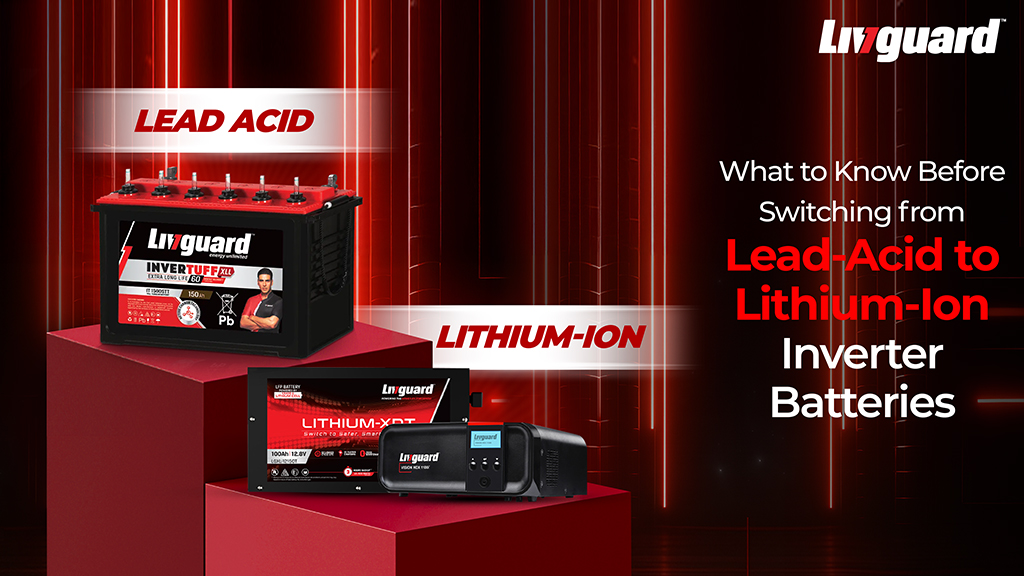
What to Know Before Switching from Lead-Acid to Lithium-Ion Inverter Batteries
| Sr. No. | Table of Contents |
|---|---|
| 1 | Quick Go/No-Go Table |
| 2 | Lead Acid vs Lithium Ion |
| 3 | Practical Takeaways |
| 4 | When Lead-Acid Still Makes Sense |
| 5 | Livguard Lithium-Ion Inverter Batteries |
| 6 | Final Verdict |
People who run their home inverters on lead-acid batteries often want to upgrade to lithium-ion. But before you pull the old battery out, there is a lot to consider. Is converting lead acid to lithium a simple drop-in? A person who is looking for the switch has to first understand certain things to save any complications.
Read on to know the lead acid to lithium conversion details in a very easy way.
1. Voltage and Chemistry Mismatch
Lead-acid batteries are forgiving. A 12 V bank (6 × 2 V cells) works fine with standard chargers. Lithium-ion (LFP), on the other hand, is slightly higher at 12.8 V nominal (4 × 3.2 V cells).
A standard 12 V lead-acid charger set at 14.4 V will overcharge a 12.8 V LFP pack. Result? Venting, heat, or even fire.
Solution: Either buy an inverter-charger with a dedicated “LiFePO₄” profile, or one where you can customize bulk, absorb, and float voltages.
2. Charging Algorithm Differences
Lithium-ion batteries need a different charge curve.
| Stage | Lead-Acid | Li-ion (LFP) | Risk if wrong |
| Bulk | 14.2-14.8 V | 14.0-14.6 V | Overcharge, shorten life |
| Absorb | Timer-based, 2–3 h | 20-30 min constant voltage | Lead-acid timer = heat and damage |
| Float | 13.5 V forever | 13.6 V or none | Float >13.8 V kills LFP |
Bottom line: Turn float off or use lithium mode.
3. Battery Management System (BMS) is Mandatory
Lead acid or lithium ion? Lead-acid is tolerant. Lithium is not. A built-in BMS is essential.
It protects against:
- Over-voltage (cell > 3.9 V)
- Under-voltage (cell < 2.5 V)
- Extreme temperatures (charge <0 °C, discharge <-20 °C)
No BMS? Say goodbye to warranty and hello to fire risk.
4. Cycle-Life and Lead Acid vs Lithium Ion Cost Reality
| Battery type | Cycles @ 80 % DoD | kWh delivered | Cost per kWh* |
| Tubular LA | 1,200 | 1,200 × 0.8 × C | ₹20–25 |
| LFP Li-ion | 3,000 | 3,000 × 0.8 × C | ₹8–12 |
*Levelised cost, 2025 India retail.
Even though lithium-ion costs more upfront, it pays for itself in 3–4 years with daily cycling.
5. Usable Capacity and Size
- 100 Ah lead-acid → 50 Ah usable (50 % DoD max)
- 100 Ah Li-ion → 80 Ah usable (80 % DoD, no sulfation)
You can downsize the Li-ion bank by 30–40 % and still get the same backup minutes.
6. C-Rate and Opportunity Charging
- Lead-acid: 0.1 C, needs 8–10 h full charge
- LFP: 0.5 C, 1–2 h full charge, no memory effect
Perfect for short grid windows or solar noon top-ups.
7. Safety and Ventilation
- Lead-acid: emits hydrogen and oxygen, requires a vented enclosure
- Li-ion: sealed, almost zero emissions → can be installed indoors, even under the bed
8. Physical Installation Checklist
| Item | Lead-acid | Li-ion action |
| Weight | 30 kg × 4 = 120 kg | 14 kg × 4 = 56 kg → rack may need reinforcement |
| Footprint | Larger | Smaller; use blank plates to stop movement |
| Cable size | 35 mm² | Same or smaller |
| Fuse | 100 A CB | Keep, add DC breaker rated for 58 V |
9. Never Mix Chemistries
Parallel old lead-acid with new Li-ion? Bad idea.
- Uneven load share (Li-ion hogs current)
- Reverse-charge damages lead-acid
Solution: Remove the lead-acid completely or use a DC-DC isolator.
Quick Go/No-Go Table
| Condition | Required | Risk (if Missing) |
| Charger profile selectable to LiFePO₄ | Yes | New inverter or external charger needed |
| Internal BMS | Yes | Bare cells not safe |
| Ambient temp sensor | Recommended | Cold charge destroys lithium |
| Space to downsize | Optional | Saves 30 % weight and cost |
| Willingness to pay 1.5× upfront | Yes | ROI in 3–4 years |
Lead Acid vs Lithium Ion
| Feature | Lead-acid | Li-ion (LiFePO₄) |
| Price (12 V, 100 Ah) | ₹12–15k | ₹25–30k |
| Usable capacity | 50 % | 80–100 % |
| Cycle life @80% DoD | 400–600 | 2,000–5,000 |
| Charge time | 8–10 h | 1–2 h |
| Weight (1 kWh usable) | ~35 kg | ~10 kg |
| Maintenance | Water top-up, cleaning | Virtually zero |
| Cold (<0 °C) discharge | 45 % | 70 % |
| Installation orientation | Upright only | Any |
| Safety | External monitoring | Built-in BMS |
Practical Takeaways
- Cost per kWh over life: SLA ≈ ₹25, Li-ion ≈ ₹8–10 → lithium is ~60 % cheaper long-term.
- Inverter runtime: 100 Ah Li-ion → 1 h at 1 kW; SLA → 30 min.
- Solar-ready: 1–2 h recharge and 98 % efficiency → harvest ~30 % more solar.
- Footprint and weight: Li-ion is ⅓ weight, ½ volume → easy indoor install.
- Set-and-forget: No water, no corrosion, BMS keeps cells balanced.
When Lead-Acid Still Makes Sense
- Budget <₹15k, very occasional outages (<10 cycles/yr)
- Existing charger cannot be reprogrammed
- You do not mind a larger footprint and 3–5 year replacement cycles
Otherwise, if you are cycling >100 times a year, lithium-ion already pays off.
Livguard Lithium-Ion Inverter Batteries
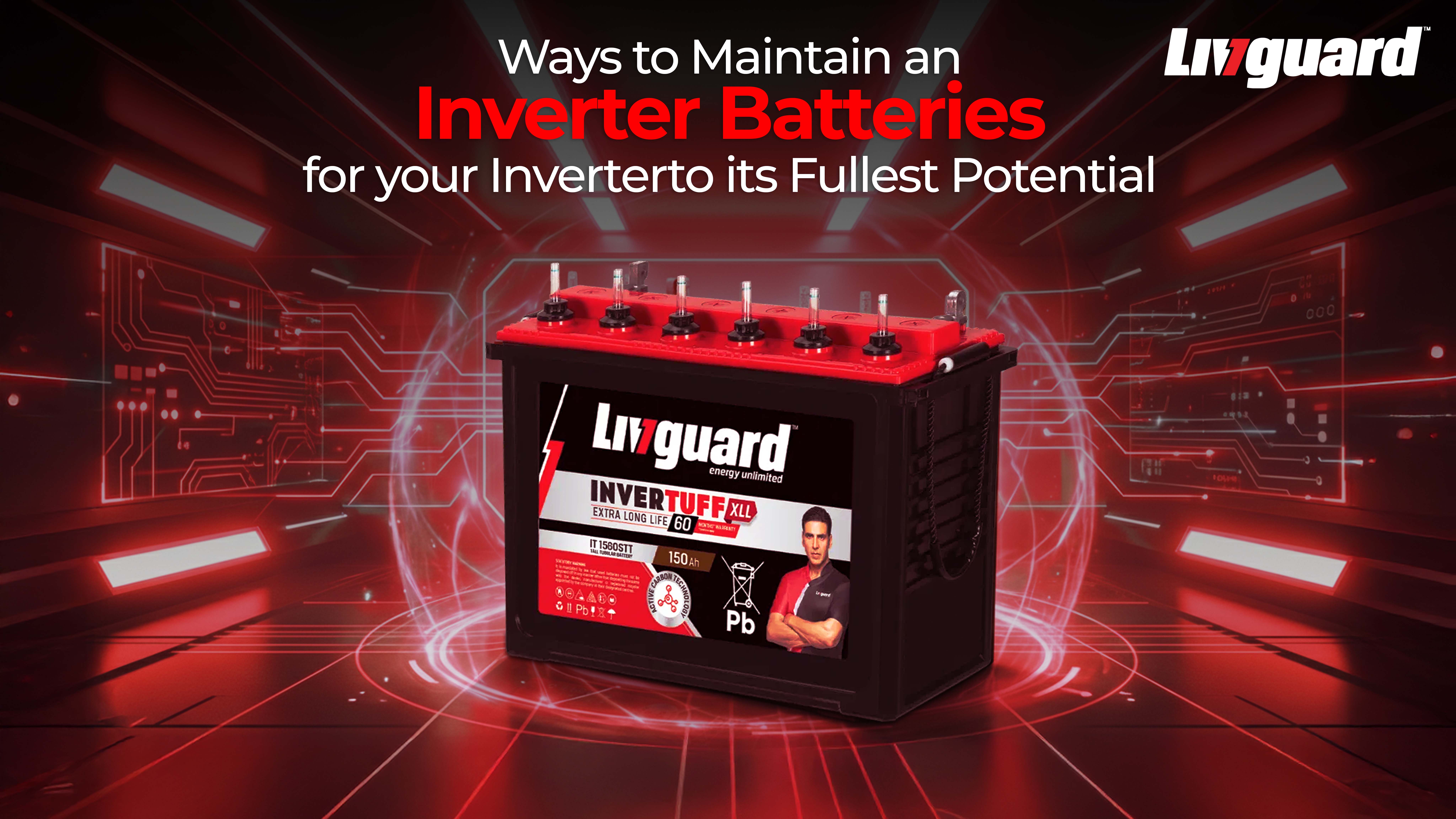
Livguard’s lithium-ion inverters are engineered for fast charge, high efficiency, and long life.
- Built-in BMS protects against over/under voltage and temperature extremes
- Compact, sealed design → install anywhere, even indoors
- High C-rate charging → 1–2 h full charge
- Long life → 3–5× the cycles of lead-acid
If you are serious about converting lead acid to lithium, Livguard offers ready-to-use packs compatible with popular home inverters. This is so convenient for making the switch.
Final Verdict
Switching lead-acid to lithium has much more in store than just swapping batteries. You have to check:
- Inverter compatibility
- BMS presence
- Temperature management
- Installation needs
Is lithium ion better than lead acid? For homes with frequent cycles, solar pairing, or space constraints, the answer is a clear yes. Lead-acid comes as viable for ultra-budget setups with rare usage.
Plan your lead-acid to lithium conversion carefully with Livguard. It is time to enjoy a longer runtime with lower maintenance.