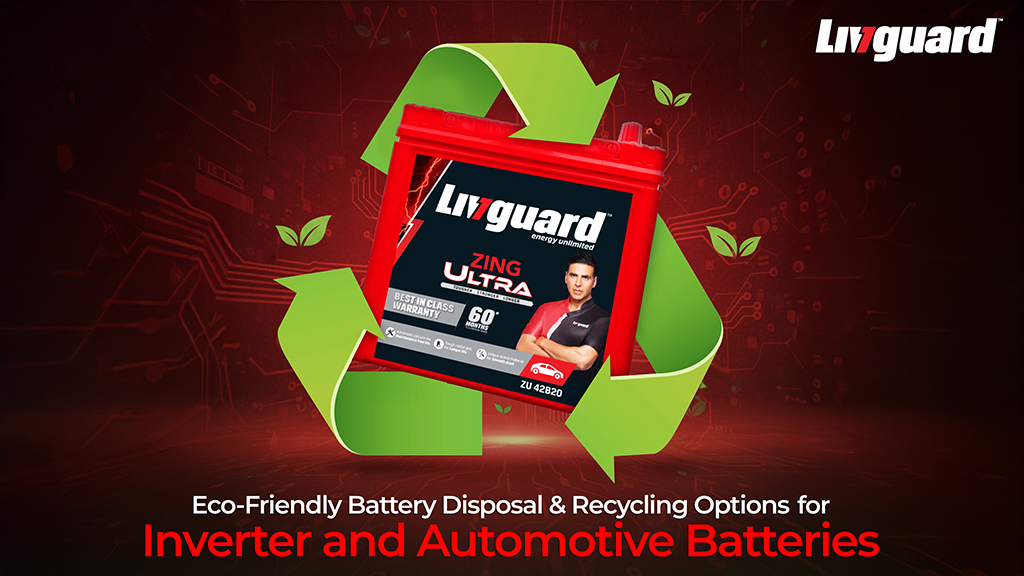
Eco-Friendly Battery Disposal & Recycling Options for Inverter and Automotive Batteries
The law does not allow us to throw our used inverter batteries in the trash. Why? It is risky as well as toxic. The heavy metals and acids present inside the batteries poison soil and water. You must have a clear understanding of car battery disposal and recycling options. Know the details of:
- Lithium battery disposal
- Lead acid battery disposal
Read on and take the first step toward responsible ownership.
Why Responsible Car Battery Disposal Matters
A single 12 V 100 Ah lead-acid car battery holds roughly:
- 9 kg lead (Pb)
- 4 L sulfuric acid (H₂SO₄)
- 1 kg polypropylene/ABS plastic
Even small lithium-ion packs (2 kWh) contain:
- 0.6 kg lithium
- 1 kg nickel/cobalt/manganese
- 3 kg copper/aluminium
When someone dumps old batteries in landfills, the toxic materials inside them seep into the soil and contaminate groundwater. In some cases, illegal smelting can even release airborne lead and dioxins, posing serious health hazards. This is why proper car battery recycling is so important. With the right process, car battery recycling can recover over 90% of valuable materials and reduce CO₂ emissions by 40–70% compared to producing metals through virgin mining.
Regulatory Framework in India
The Battery Waste Management Rules 2022 (BWMR) apply to inverters, EVs, and automotive batteries alike.
- Manufacturers/importers must collect 70% of batteries placed on the market by 2025, 90% by 2027.
- Consumers can drop off batteries for free at retailers or authorised collection points (1-for-1 exchange).
- CPCB issues EPR certificates; illegal scrap yards face fines of ₹1-5 lakh.
Bottom line: Responsible disposal is the law and good for the planet.
Step-by-Step Disposal Route
- Never throw batteries in municipal trash.
- Keep the battery upright and terminals taped.
- Log serial numbers or photos for proof.
- Choose an authorized disposal channel.
Channels for Lead-Acid Batteries
Lead-acid inverter or car starter batteries are widely recycled. Options include:
A. Brand Take-Back Programs
Livguard’s Take-Back Program collects used lead-acid batteries through authorised centers (E-WASTE RECYCLERS INDIA (EWRI)) across India. These centers ensure safe handling and recycling as per CPCB norms. Dealers help channel old batteries into the system. This act supports eco-friendly reuse and responsible waste management.
B. E-Commerce Reverse Logistics
Amazon, Flipkart, BatteryBhai, Dunzo: prepaid courier labels, refund credited in 24 h.
C. Aggregator Apps (Urban)
Kabadiwala, ScrapQ, Recykal: enter PIN, weight, receive instant UPI payment. Only CPCB-authorised recyclers are involved.
D. RVS Facility Locator (Pan-India)
CPCB portal lists 68 lead-acid recyclers. Examples: Gravita India (Rajasthan), ECOBAT (Gujarat), Pondy Oxides (Tamil Nadu) – >95% Pb recovery, ISO 14001 certified.
Channels for Lithium-Ion Batteries
Lithium batteries (used in EVs, inverter packs, and e-rickshaws) are hazardous e-waste. Only CPCB-registered dismantlers should handle them:
- CATL, Attero, Tata-Chennai, Lohum (Delhi), and ACE (Hyderabad) run consumer drop-boxes.
- Process: fill online form → receive UN-approved fire-proof carton → door pick-up → EPR certificate emailed in 7 days.
Lithium requires special handling due to thermal runaway risk.
What Happens Inside Authorised Plants
Lead-acid recycling:
- Neutralize acid → sodium sulfate (detergent raw material).
- Smelt grids & paste → 99.97% pure Pb ingots for new batteries.
- Polypropylene casing → plastic granules for lids. Material yield: 95-97%.
Lithium-ion recycling:
- Deep discharge → dismantle modules.
- Mechanical shredding under inert gas → “black mass.”
- Hydrometallurgy → recover Co, Ni, Mn, Li carbonate (98% purity).
- Remaining Al & Cu foils sold to metal mills. Material yield: 92-94%.
Consumer Incentives
- Lead-acid scrap value (2025 avg.): ₹9-11 per Ah (≈ ₹90-110/kg)
- Li-ion scrap value: ₹180-220 per kWh (≈ ₹3-4 per 18650 cell)
- Some recyclers offer extra ₹1-2/kg if you waive the EPR credit.
Drop-offs are free, and you earn cash while keeping the environment safe.
Safety Tips
- Never crack open a lead-acid battery. Because sulfuric acid burns and lead dust is toxic.
- Punctured Li-ion → thermal runaway (>300 °C). Store in a metal bucket with sand until pick-up.
- Always transport upright and in the original crate when possible.
Take-Away
- Use a brand take-back or CPCB-authorised aggregator for car battery disposal.
- Insist on a digital EPR receipt, legal proof of proper recycling.
- Lead-acid already >90% recycled in India; lithium infrastructure is catching up.
- Your conscious drop-off keeps materials in the loop and pollutants out of the environment.
Note: Whom to Call, CPCB hotline: 011-2469 2355 (report illegal dumping)
Livguard Eco-Friendly Programs
Livguard offers comprehensive automotive battery recycling for inverters and take-back programs:
- Pan-India dealer network for lead-acid and lithium packs.
- Instant scrap valuation and digital EPR certificate.
- Specialised handling ensures safety, regulatory compliance, and material recovery.
By using Livguard’s authorised channels, your old inverter or automotive battery gets recycled responsibly. It reduces landfill waste and recovers metals for new batteries.
Conclusion
When you wish to become responsible and go forward with a proper car battery disposal, you need to know the above details. All batteries (lead acid or lithium-ion) consist of valuable metals and toxic chemicals. You can safely dispose of or recycle your car and inverter batteries using various options. This is how we close the loop for a cleaner, greener future.