E-Rickshaws: Sustainable Urban Transport in India
Be it being late for college or office, or just going to the nearby market to get some groceries, if there’s one transport that has been both affordable and reliable, it has to be the E-rickshaw. Battery-operated three-wheeler E-rickshaws are the next step in the evolution of rickshaws in India. Over the decade, the market of rickshaws has seen a tremendous up-gradation, from hand-pulled ones to cycle rickshaws to motor-assisted rickshaws. However, each of them had its drawbacks, ranging from physical labour to causing harm to the environment. E-rickshaws overcome all the drawbacks of the previous variants with their eco-friendly design and make.
E-rickshaw have an enormous potential to provide connectivity to people without manual labour. These vehicles have gained much popularity owing to the comfortable and economical mode of transport they provide to all.
What Is an E-Rickshaw? Types & How It Works
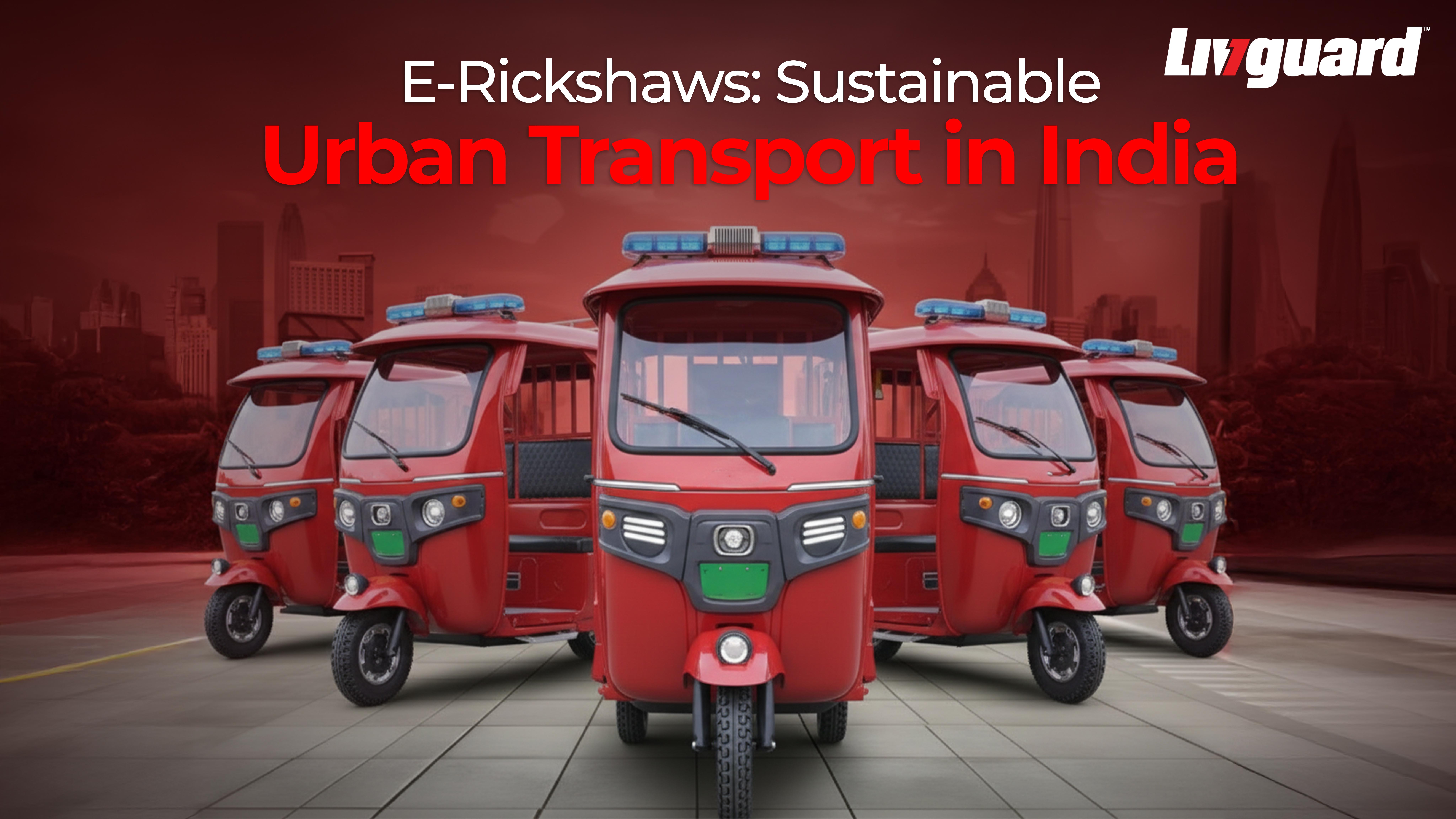
But before we start, let us understand what an E-rickshaw is. To put it simply, Electric rickshaws are compact three-wheeled vehicles that run on an electric engine and battery. These compact electric vehicles provide more mobility than conventional cycle rickshaws and pulled rickshaws, yet they don’t need petroleum fuel like auto rickshaws do.
They’re a lot different than auto rickshaws and cycle rickshaws, below is a comparison:
| Vehicle Category | Energy Source | Primary Application | Environmental Impact |
| Cycle Rickshaw | Human Power | Manual short-distance passenger transport | No emissions, minimal noise |
| Conventional Auto-Rickshaw | Petrol / Diesel / CNG | Daily commute, medium-distance city travel | High emissions, high noise pollution |
| Electric Rickshaw (E-Rickshaw) | Battery-Electric | Short trips, last-mile connectivity, cargo/freight | zero tailpipe emissions, very low operational noise |
Why E-Rickshaws Are Gaining Popularity in India
So, why are they suddenly becoming so popular in India? Well, there are some electric rickshaw benefits that drive their popularity. Firstly, since they don’t run on fuel but batteries, they’re a comparatively cleaner alternative to petrol vehicles. Secondly, there is a human aspect to it as well. Normal rickshaws require insane physical effort, and e-rickshaws require practically no effort at all as they run on a battery. They’re also super cost-effective, as there is both a lower maintenance cost for rickshaw pullers, and as a result, fares are also quite low. The reasons why people choose e-rickshaw are:
- Eco-friendly: If you have every wondered how e-rickshaw reduces pollution, here’s your answer: As these are battery-operated, they are an excellent choice of commuting vehicle as an alternative to petrol/diesel/CNG-driven vehicle. They do not consume fuel and emit smoke, thus, reducing carbon footprints on the planet.
- Economical: In comparison to other types of vehicles, these are affordable and a reasonable option for common buy. Not only for the owners, but it is also a cheap option for the passengers, and hence, they prefer these over others. The public has to pay fewer transport charges for the rides, thus making them an easy choice for all.
- Easy to drive: These are easy to drive in comparison to hand-pulled rickshaws and require the least manual labor.
- No noise pollution: These do not make any sound and therefore, do not add to noise pollution.
- Livelihood: E-rickshaws are a boon to a common man in terms of commutation and travel. Without putting in much physical effort and investments, the earnings are quite good for an E-rickshaw driver and less spending by the traveler as well. Thus, a great option for both the rider’s and driver’s livelihood.
Battery & Technology Behind E-Rickshaws
Now, there are many different aspects to the battery and technology used in E-rickshaws; the table below explains it simply. This guide also acts as electric rickshaw maintenance tips, as it allows you to maintain the lifespan of the E-rickshaw with the right battery.
| Category | Points |
| Types of Batteries | Lead-acid Tubular- SMF (Maintenance-free)- Lithium-ion |
| Good Battery Qualities | Long cycle life- Deep discharge support- Strong grid design- Fast charging- Low maintenance |
| Livguard Advantages | High backup- Strong under load- Long life for commercial use- Heat-resistant design |
| Care Tips | Avoid over-discharge- Charge properly- Top-up distilled water (if needed)- Clean terminals- Use the correct charger |
Challenges & Limitations of E-rickshaws
While there are many e-rickshaw advantages over auto, there are a few challenges and limitations as well that come with E-rickshaws. Let’s understand them in a little more detail.
Need for Better Charging Infrastructure
Not all cities have easily accessible charging stations or swap points.
Battery Replacement Costs
Drivers depend heavily on battery quality—poor batteries reduce income and increase downtime.
Load & Range Constraints
Overloading or steep inclines can strain the motor and battery, reducing lifespan.
Regulation & Traffic Integration
Many cities are still determining how to manage the rising number of e-rickshaws.
Environmental Recycling Concerns
Proper disposal and recycling of batteries is essential for environmental balance.
Conclusion
While E-rickshaws have opened a path for income, certain limitations come with E-rickshaws, which Livguard addresses very carefully. Lack of charging infrastructure? Our batteries last quite a long time, and our batteries are made with easily recyclable materials and come with longer discharge cycles, which means they’ll last you for a good amount of time.