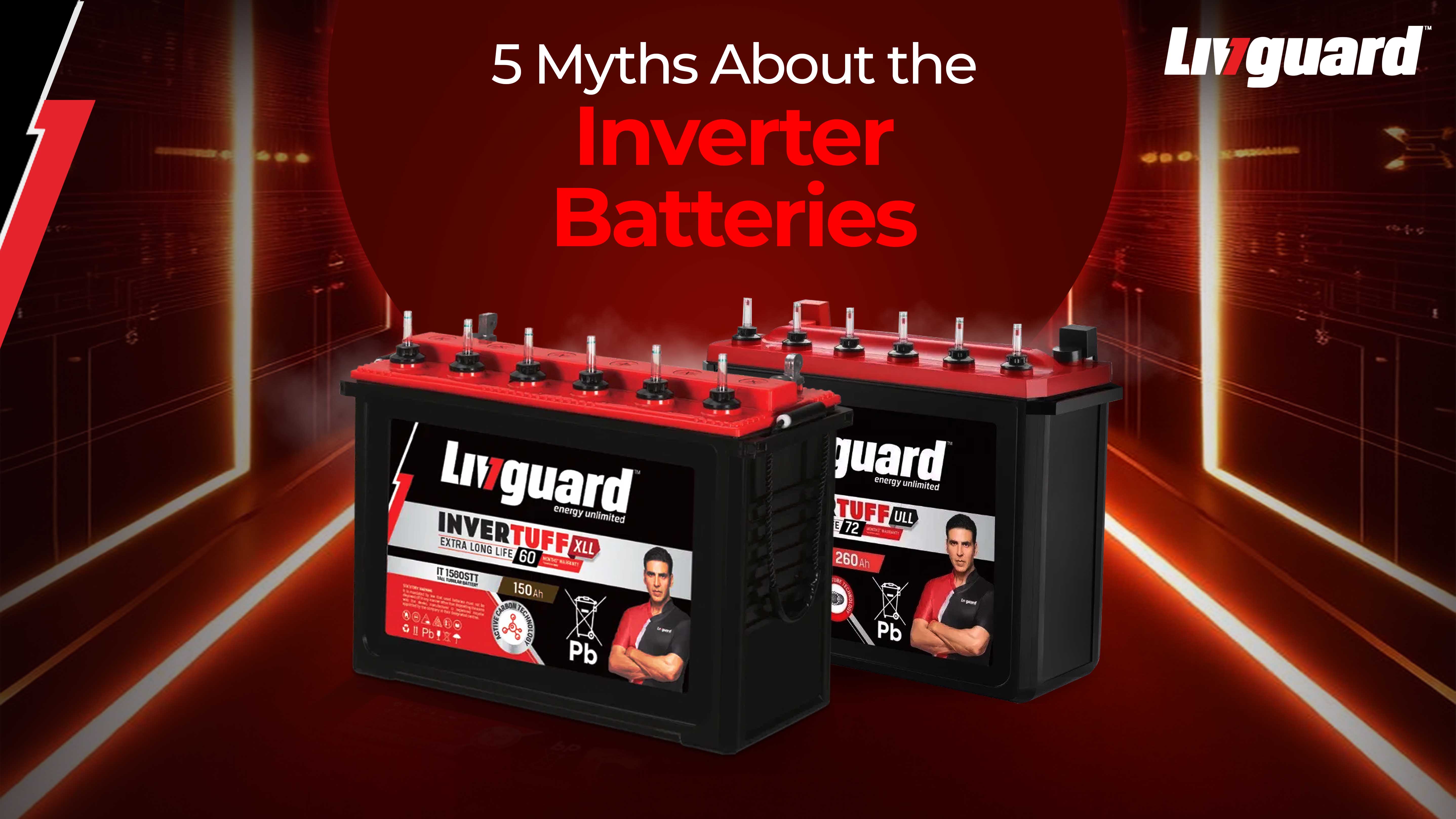
5 Myths About the Inverter Batteries
With the uncertainty of power cuts, having a reliable power backup system is important. For that, you need to get yourself the right inverter and inverter battery. Luckily, there are multiple options, although the many options can also make the decision difficult. What can make it all easier and more convenient is having the correct facts and information at hand.
As you explore the wide range of inverter batteries, you may come across some myths that can prevent you from making the correct decision, while making the purchase, as well as while using it. That is why, here we have mentioned the 5 myths about inverter batteries.
All Inverter Batteries Are the Same?
A myth!
As you start looking at your options when buying an inverter battery, you will come across phrases like tall tubular, short tubular, short tall tubular, and short tubular jumbo. These are not random but specific names given to the different types of batteries.
- Tall Tubular Batteries: These are taller and slimmer, designed for areas with long and frequent power cuts. They offer longer backup durations and better charge retention, making them ideal for homes with high energy needs.
- Short Tubular Batteries: Compact in height, these fit easily into smaller spaces. They provide moderate backup and are well-suited for urban homes where power cuts are shorter and less frequent.
- Tall Short Tubular Batteries: A balanced design combining the features of tall and short tubular types. They offer good backup capacity while still being space-efficient, making them a versatile option for both domestic and office setups.
- Short Tubular Jumbo Batteries: These come with a compact body, delivering higher power output and backup than standard short tubulars. They’re perfect for users who want strong performance without needing a tall unit.
There’s more! You will find different inverter battery size options and capacities. The size matters as it should be a perfect match for the inverter. Coming to the capacity, it is obvious that the higher the power requirement, the greater the capacity you will need. You should calculate your power requirements and running time to accurately calculate the required battery capacity.
So, as you can see, not all batteries are the same. There are various batteries designed with different technologies and features to serve the varying power requirements.
Inverter Batteries Need Constant Maintenance!
It is a misconception that many have about inverter battery maintenance.
And while we are at it, let’s burst another myth – low maintenance isn’t equal to maintenance free sealed battery.
Modern inverter batteries are made with advanced technology like 3D Grid technology to ensure powerful, long-lasting performance. But there are factors to consider when it comes to maintenance of battery lead acid. Let’s say:
- Dust and rust accumulating on the terminals?
That’s not right because it can disrupt the current flow and weaken the connections. So, you must check regularly to ensure there isn’t any dust or rust, and if there is, you must clean it.
- Using tap water to top up?
Tap water contains minerals and impurities that can keep accumulating over time and damage the battery. Also, an inverter battery without water will start to oxidise and lose power. You must use distilled or demineralised water.
- Battery overheating excessively? Backup time reduced? Sudden Shutdowns?
These can be because of overloading the battery, incorrect or overcharging, or loose or corroded terminals. With regular checkups, you can identify and solve these issues before they turn into problems. In the absence of regular inspection, the performance will keep dropping, and the battery might just stop working altogether.
Inverter Batteries Do Not Last Long
That’s an absolute myth. Let’s discuss!
Inverter batteries aren’t something you buy every now and then. Naturally, when manufacturing, the lifespan is given priority. Batteries are made using advanced technology and quality materials to ensure a long-lasting battery life with consistent performance.
That said, the lifespan also depends on the right usage. For example, if the battery is not sufficient for the power requirement you have, it will end up overloading and overheating, shortening its lifespan. Likewise, overcharging can lead to overheating, undercharging to sulfation, and poor charging can lower the performance. These factors can have a negative impact.
Did you know? Each Livguard battery comes with long warranties, both replacement and pro-rata warranty up to 48 months (combined)
You Must Completely Discharge the Battery Before Charging
Do you wait for your phone battery to die completely before you charge it? The comparison may not be well-chosen, but it helps prove a point.
Many may have the misconception that allowing the battery to discharge completely helps it reset or perform better, but it does the opposite. Frequent deep discharge can harm the battery by forcing it to work harder. It can weaken the performance, reduce capacity, and shorten lifespan. If the charge drops too low, too frequently, there is a chance of sulfation. So, make sure to charge the battery properly. Do not wait for it to drain completely.
Let us bust another myth here! Contrary to what many believe, batteries can discharge even when not in use.
Summary
Understand your power requirement and pick the right battery for your inverter. Ensure proper usage and maintenance for robust performance and long lifespan.
Find sturdy, safe, and long-lasting inverted and inverter batteries on Livguard. We offer a range of versatile batteries with advanced features and extended warranty. Check out our inverter batteries and choose the right fit for your home.