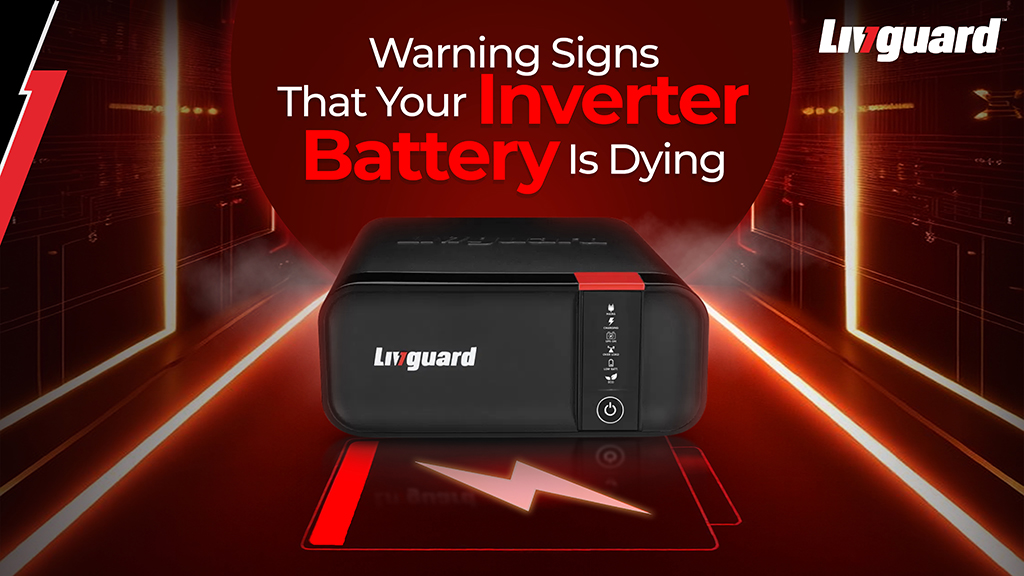
Warning Signs That Your Inverter Battery Is Dying
Light can go out anytime. It will not see whether you were enjoying a movie night or halfway through cooking dinner. Your inverter shows its real importance in such moments of despair. But one important thing to notice here is that your inverter battery has to be up to date for you to enjoy the blessings of an inverter to the fullest. What you will have to check is if the inverter battery life is quietly running out. Inverter batteries do age. They give out signals before failing, like any other device might do.
Read on to get the common warning signs that will tell you that your inverter battery is dying. Also, learn to ensure a smoother and stress-free backup power experience.
Knowing the Signs of Your Dying Battery is Important
If you are using inverters, you need to have complete knowledge about how to go about care and maintenance. This helps you in maintaining its performance and lifetime. Batteries are prone to certain issues if you do not take good precautions beforehand. You need to be aware of the early signs to save yourself from –
- Sudden blackouts
- Expensive last-minute replacements
- Even safety risks like overheating
Monitoring the life of an inverter battery helps you plan better and ensures your home always stays powered.
Top Warning Signs Your Inverter Battery Is Dying
Go through the main ones so that you do not miss any:
Performance Issues
- Reduced Backup Time: Your battery does not last as long as it used to.
- Frequent Tripping: The inverter shuts down more often during outages.
- Diminished Charging: Takes longer to charge or does not reach full charge.
Physical Signs
- Swelling or Bulging: Indicates overheating or internal damage.
- Corrosion or Leakage: Acid leaks or corroded terminals reduce performance.
- Excessive Heat: If the battery feels hot to the touch, it is a red flag.
System Indicators
- Warning Lights: Most modern systems have indicators that flag issues.
- Unusual Sounds or Smells: Buzzing, hissing, or burning smells are trouble.
- Voltage Fluctuations: Lights flicker or appliances trip frequently.
Age Factor
Most inverter batteries last 3 to 5 years. If your battery is older, even with no visible issues, it is time to plan a replacement.
Common Warning Signs
| Category | Warning Sign | What It Means |
| Performance | Reduced backup time | Battery capacity is declining |
| Physical | Swelling or leakage | Internal damage or overcharging |
| System | Warning indicators, noises | Battery nearing failure |
| Age | 3–5 years old | Natural end of life of an inverter battery |
Why Batteries Fail
- Overloading: Running too many appliances drains it faster.
- Poor Charging Habits: Constant overcharging reduces lifespan.
- Temperature Extremes: Heat accelerates wear.
- Neglecting Maintenance: Not topping up water in lead-acid batteries shortens life.
How to Prolong Inverter Battery Life
- Use energy-efficient appliances.
- Avoid overloading the system.
- Regularly clean and check battery terminals.
- For tubular batteries, check electrolyte levels.
- Keep your inverter in a cool, ventilated space.
These steps help ensure inverter battery long life and fewer breakdowns.
Livguard Advantage: Longer Battery Life
If you want a battery and inverter combo that lasts, Livguard inverter batteries stand out.
- SuperTUFF 3D Grid Technology: Stronger design, longer durability.
- Carbon Nanotube Plates: Better backup and recharge performance.
- Deep Discharge Design: Handles frequent power cuts with ease.
- Fast Charging: Always ready for the next outage.
- Thermal Protection: Dual-sensor tech prevents overheating.
- Extended Warranty: Up to 7 years, giving enough relief
- Low Maintenance: Convenient for busy households.
Livguard has these outstanding features to ensure that you get more inverter battery life and reliable performance.
When to Replace Your Battery
If your system shows multiple warning signs, it is time for a new battery for inverter. Do not wait for a complete failure. You get several offers in terms of inverter batteries at Livguard with top-notch durability and performance. The batteries are designed for both homes and commercial setups.
How to Extend Your Inverter Battery Life
Catching warning signs is important, but knowing how to care for your battery can save you from early replacements. A couple of simple habits are good for your inverter battery long life:
- Regular Charging: Keep the battery fully charged once the supply is back, even during long power cuts.
- Avoid Overloading: Don’t connect heavy appliances beyond the inverter’s capacity.
- More load = shorter battery life.
- Check Water Levels: For lead-acid batteries, maintain the electrolyte level with distilled water.
- Keep it Clean: Clean terminals and apply petroleum jelly to avoid corrosion.
- Proper Ventilation: Place the battery in a cool, ventilated space to prevent overheating.
- Timely Servicing: Get periodic health checks done, preferably from authorised service centres.
Livguard Tip: Livguard inverter batteries are designed with SuperTUFF 3D Grid Technology and low-maintenance tubular plates, so they already need less care. But if you pair them with good habits, you will enjoy years of uninterrupted power.
Conclusion
You already know that your inverter battery will not last forever. Yet, if you spot warning signs early and take good care, you can actually extend its life. The tips given above will help you track each one of them early on. And for replacement, Livguard is there to make the choice easier. Our inverter batteries have advanced features and long warranties. So, a little attention now can give uninterrupted comfort in the future.