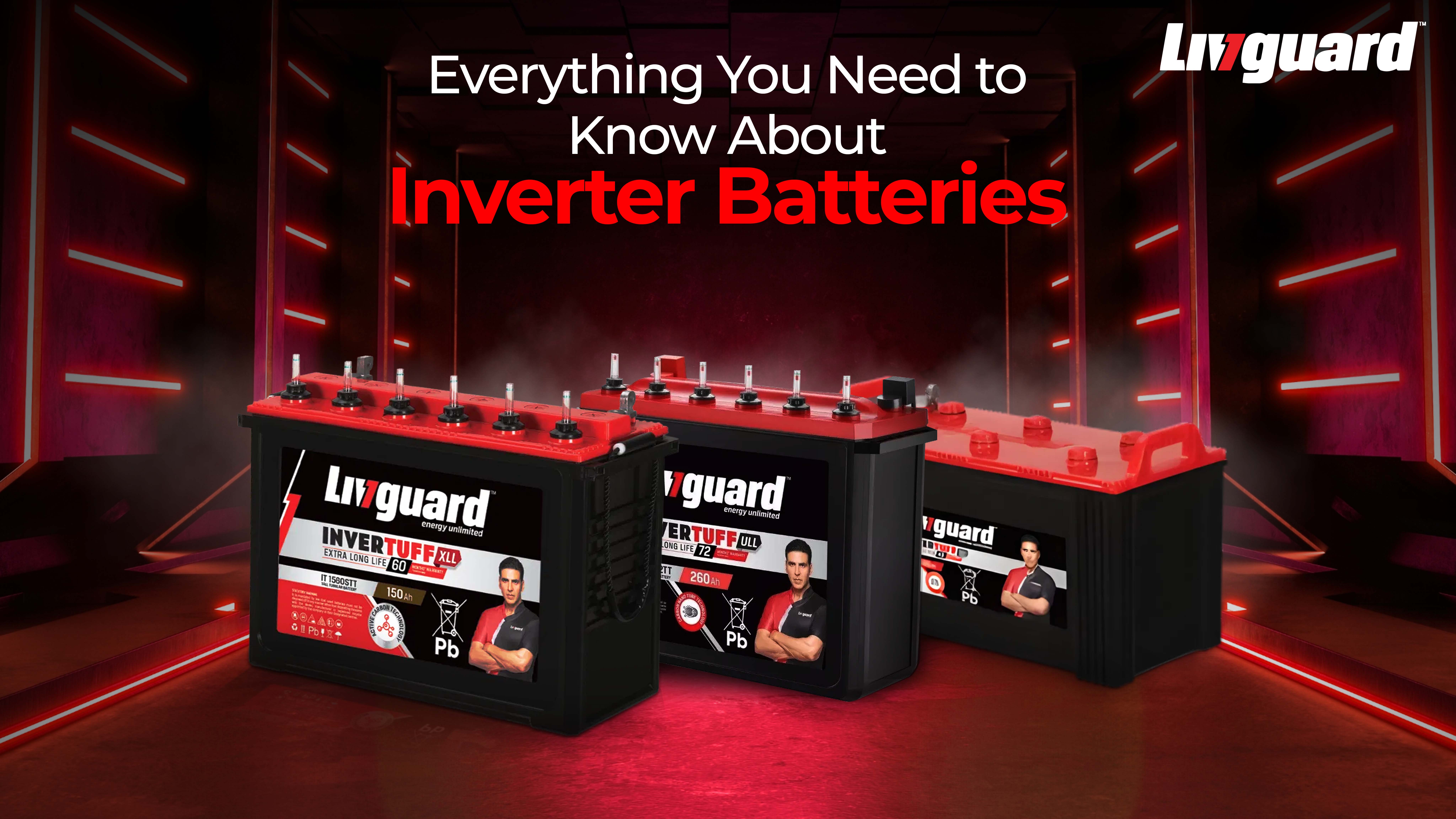
Everything You Need to Know About Inverter Batteries
Inverter Batteries for Home
The battery is the backbone of an inverter system. To make sure that your inverter delivers a longer lifespan and optimum performance, you must ensure that it is equipped with the right features and specifications. It’s also important to understand the different types of inverter batteries, as each type offers unique benefits and performance levels depending on your power requirements.
The best inverter battery for the home should have a high life cycle and it should be dependable enough to provide a reliable power backup. It should also have a high-efficiency rate and have a greater amount of backup duration as well to offer sufficient electricity during long power cuts.
It makes sense to purchase an inverter battery from a reputed brand to get the most out of your purchase. You should also emphasize the charging speed of the battery as it directly impacts the supply of current and helps the inverter generate a higher amount of electricity in relatively less time.
Additionally, to make your purchase even more satisfactory, make sure your preferred inverter battery also has a long warranty period. This will allow you to get your battery repaired or serviced free of cost and extend its life even more.
It should also perform optimally at higher temperatures and long durations to ensure that the operation is safe. Low-quality batteries tend to break down at high temperatures, which makes it more apparent to choose a safe battery instead.
Can I use a vehicle battery as an inverter battery?
Auto batteries are designed to deliver a large amount of current for a short period, usually just for a few seconds to crank the engine. They are then replaced by alternators that replenish them with charge and maintain their state until they regain their full potential.
On the other hand, batteries designed for inverters are designed to provide a small amount of current consistently for longer durations. All backup power solutions—inverters and uninterruptible power supplies— function by converting the DC current into AC current.
To sustain this, the UPS and Inverter battery are discharged over a much longer time to lower electrical potential that is as compared to the automotive battery. This type of battery is also known as a deep cycle battery.
The plates of deep-cycle batteries are resistant to damage from being discharged deeply, but the plates of automobile batteries are not, which is why it is not recommended to use a vehicle battery as a battery for your inverter.
One thing that impacts how long your backup batteries last is the electrolyte volume. This is because it determines the number of chemical reactions that take place, which in turn produces current. That’s why if you’re looking to buy a new type of battery for your home appliances, make sure you’re buying the right type. Using the wrong battery can reduce its lifespan considerably.
Which acid is used for Inverter batteries?
Inverter batteries are rechargeable, and unlike primary batteries, they can be recharged hundreds of times. Their ability to convert chemical energy into electrical energy makes them a good fit for storing power for later use. Among the different types of inverter batteries, most commonly use lead-acid technology, where sulfuric acid acts as the electrolyte that enables the chemical reactions needed for charging and discharging.
The lead-acid batteries are made using lead and lead dioxide electrodes dipped in an electrolyte solution of sulfuric acid. If you’re wondering what are lead acid batteries, they are one of the oldest and most widely used rechargeable battery types, known for their reliability, affordability, and ability to deliver high surge currents.
As it is made up of two different electrodes dipped in sulfuric acid, the chemical reactions that take place between them generate electricity. These chemical reactions can be reversed to recharge the battery, which makes them very practical and common.
If you want to check the state of charge of your lead-acid batteries, then be sure that they are fully charged. Check the electrolyte level by observing the battery’s indicators. The electrolyte level should be equal in each cell for the proper working of batteries.
Inverter Battery Water
The electrolyte solution in a flooded deep cycle battery is a mixture of acid and water. The use of distilled water for inverter batteries is recommended because it removes any additional minerals, including those found in normal tap water which can significantly decrease battery life.
Distilled water should be the only substance you ever put into your deep cycle batteries. You should never add another acid or electrolyte solution because doing so will diminish the battery’s lifespan. Distilled water is water that has been purified to the highest standards, meaning it has zero impurities.
Because of its lack of impurities, distilled water can be used for many purposes including refreshing car batteries and replenishing your home’s inverter system. Now, you may ask what’s the problem with the water we drink. Well, due to some ions in the water we drink, some of these ions get into the electrodes that allow the current to flow in the battery.
Certain inverters have a built-in water level monitor, so you will know when to add water, and how much water is needed. The acid inside the battery chamber gets more concentrated over time. A lack of water means it’s harder to create an optimal balance between acid and water. This decreases the inverter’s efficiency, which in turn decreases its output.
To ensure that the sulphuric acid doesn’t become too diluted, you should keep enough water in your battery. An indicator for inverter battery water filler level is present on every battery. If the indicator is at the “Green” mark, you have adequate water in the inverter and it is completely topped off. However, in case it is at the “red” mark, the water is below the advised level and a top-up is required at this point.
Types of Inverter Batteries
Dry batteries vs Wet batteries
A battery is useful because of its portability. It can be used to store electricity, which can be used to power various devices while also allowing them to be mobile. There are many different kinds of batteries, including wet cell batteries and dry cell batteries.
While wet cell batteries are still used today, they are less common than dry cell batteries. Dry cell batteries are used for nearly everything now, from smartphones and other electronic devices to regular household items such as flashlights and clocks.
The biggest difference between wet and dry cell batteries is the electrolyte. A wet cell battery requires a liquid electrolyte, which means it can only be used in one orientation. Dry cells don’t have this limitation and can typically be upright, sideways, or in any other direction.
Since wet cell batteries are used in items that require more power, they are naturally larger. Dry cell batteries are used in smaller devices that need less power, making them much smaller. If you’re looking for a battery to power a large device such as an automobile, aviation, electric utilities, cell phone towers, and for energy storage, you would be given a wet cell battery.
Tubular vs flat plate batteries
In simplest terms, a tubular plate battery is ideal for areas that experience long power cuts, whereas a flat plate battery is recommended for areas with frequent but short power cuts, such as rural areas and suburbs in city outskirts.
Lead-acid batteries are the most commonly used type of flat battery by Indians. These typically contain a lead electrode and a lead dioxide positive electrode. The negative electrode is typically sulfuric acid.
These batteries are light, as such they do not provide as much as some other batteries on the market, but they require less maintenance than those other products. You will need to keep checking on the distilled water in these batteries.
If you don’t, you risk damaging the battery. These flat-plate batteries are the most short-lived, which is why it’s important to periodically check them. On the other hand, Tubular batteries are flat plate batteries that have been improved so they require less maintenance.
As a result, tubular batteries last longer than ordinary flat plate batteries − up to five years. The difference between these two types of inverter batteries is that it’s an alkaline battery except the positive electrode is replaced with a tube and a cloth covering for protection.
It also enhances the battery’s efficiency levels. This may have made it apparent which battery is better and fits the bill for you. However, keep in mind that it also depends on your area and the frequency of power cuts.
Final Words
Inverter batteries are a great way to power all of your appliances and devices. They come with a variety of features that make them ideal for home use, but they can be used in commercial settings.