Understanding Heavy Commercial Vehicle Batteries: What You Need to Know
A battery is a very important component of a vehicle. While a regular car battery mostly deals with starting the engine and running a few gadgets, a Heavy Commercial Vehicle (HCV) battery has the stamina of a marathon runner. It powers
- Massive engines
- Air compressors
- Internal lights
- A whole system of electrical equipments
In commercial vehicles, the battery has to work harder than a standard one. These vehicles are often used in tough conditions. They also need extra power to work smoothly.
So, choosing the right battery for commercial vehicles is important.
Commercial Vehicle Battery: Key Distinctions
A commercial vehicle carries goods and passengers. These are often leased vehicles owned by a company.
These vehicles need batteries that can handle:
- High power output for starting big engines
- Extended use during long trips
- Dependability in all conditions
- Bumpy roads and constant shaking
- Performance in extreme temperatures and weather conditions
- Deep cycling for repeated use without losing capacity
Commercial vehicle batteries are made to deliver more energy and endure challenging situations. They give you reliable starting power and help run multiple systems in the vehicle.
Key Benefits of Heavy-Duty Batteries
Choosing the right battery for your commercial vehicle brings several advantages:
- Reliable performance in all conditions
- Safety with corrosion-resistant and robust design
- Low maintenance under normal operating conditions
- Proven longevity with longer life compared to standard batteries
- High cranking power to start engines even in cold weather
- Durable construction for rough terrains and vibrations
Types of Heavy Commercial Vehicle Batteries
Typically, when choosing the right battery for commercial vehicles, you will come across:
| Battery Type | Key Features |
| Lead-Acid (Flooded) | – Affordable- Reliable- Robust design and casing, so low maintenance – All weather compatibility |
| AGM (Absorbent Glass Mat) | – Sealed & maintenance-free- Resistant to vibration- Faster charging- Ideal for stop-start technology and heavy accessory use |
| Gel Batteries | – Deep-cycle performance- Low self-discharge- Suited for extreme weather- Perfect for long-haul trucks |
Tip: Battery choice depends on your fleet’s needs, operating conditions, and maintenance capabilities.
To make things easier, we bring you our Vehicle Battery Finder Tool. Choose options from the dropdown in a few clicks, and we will help you find a perfect match for your truck/bus battery power requirements. You can also download the catalogue to select the ideal battery for your bus or truck.
What to Look for in the Best Truck Battery
- Cold Cranking Amps (CCA): Key for starting engines in cold climates or high altitudes.
- Reserve Capacity (RC): Determines how long the truck can run if the alternator fails. It is essential for remote logistics.
- Casing Quality: Must resist heat, vibration, and rough roads.
- Maintenance Needs: Low-maintenance options reduce downtime.
- Manufacturer Reputation: Choose brands experienced with fleets in hot, rugged environments.
Livguard Heavy Commercial Vehicle Batteries: Tough, Reliable, and Built to Last
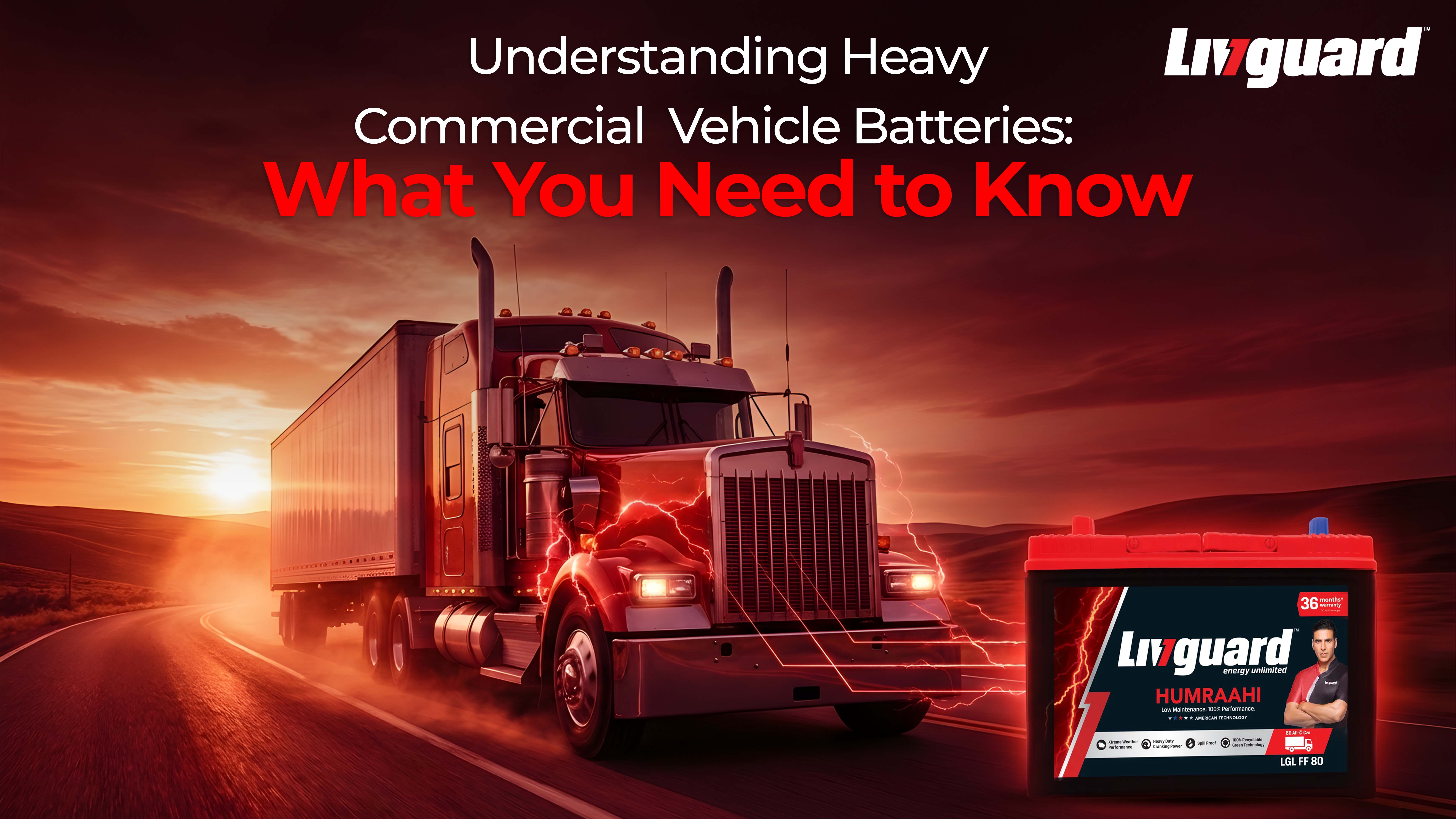
When your fleet demands strength and all-weather performance, Livguard’s Bus and Truck batteries rise to the occasion. These are engineered for heavy-duty operations mile after mile.
Key Features:
- Low Maintenance: Durable design and advanced technology reduce waste and service needs. They give you more uptime and less hassle.
- Heavy-Duty Cranking Power: Optimised grid structure and plate chemistry deliver high-efficiency starts, even under tough conditions.
- Long Battery Life: Robust construction and double-clad separation ensure extended service life. Minimal replacements.
- All-Weather Performance: Engineered to perform consistently in extreme heat, cold, or desert conditions, keeping your fleet moving without interruptions.
We have a battery range for every fleet. Our Humraahi & Humraahi Xtralife Series has capacities from 80Ah to 180Ah, with warranties ranging from 36 to 48 months.
Summarising
Consider your vehicle’s power needs and usage when you select a battery. It decides how your heavy vehicle works. For example, a truck that drives long distances every day will need a battery that can support long hours and engine starts.
Understanding your commercial vehicle battery specifications and bus battery power requirements is important. It helps you choose a battery that keeps your vehicle working easily. Look after your battery and choose the one that fits your vehicle. This can help you avoid sudden breakdowns and make your battery last longer.