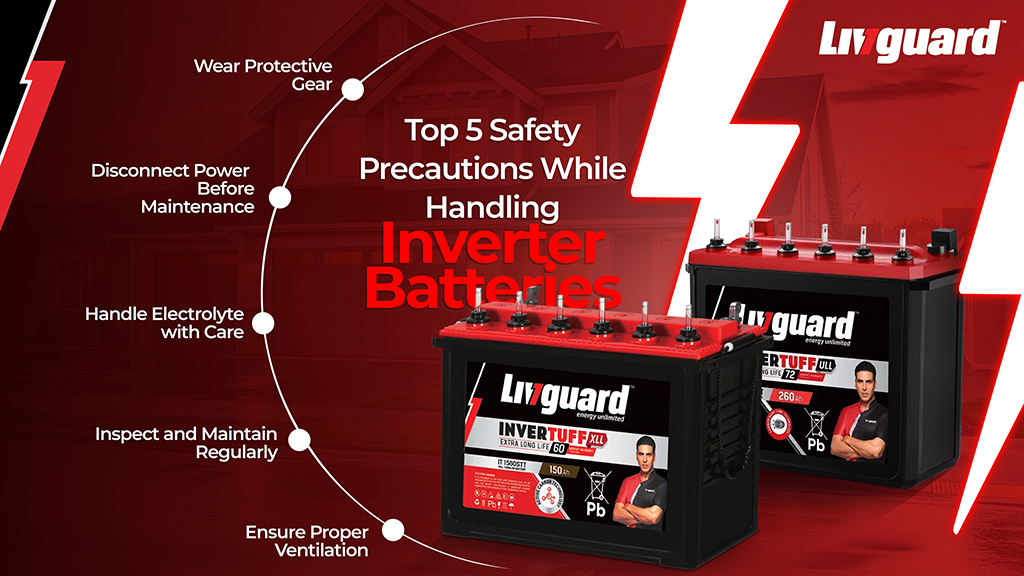
Top 5 Safety Precautions While Handling Inverter Batteries
Inverter batteries quietly sit in your place and serve their valuable purpose. They never complain, never take a day off but a little care goes a long way! Following a few battery safety precautions keeps your battery happy, your home powered, and yourself shock-free.
Yes, safety precautions don’t just apply during installation; they matter every step of the way. From setup and daily use to charging, maintenance, and even disposal, there are things to be mindful of. So, let’s explore them one by one.
Why Battery Safety Matters
Inverters and Inverter batteries are no longer some “nice to have” luxuries; they’re very much a necessity, seeing the rising power cuts.
Inverter Batteries are usually safe, but they can be dangerous if they aren’t taken care of properly. Some of the most common dangers are:
- Short circuits, overheating or damaged wiring can trigger electrical fires.
- If lithium-ion or lead-acid batteries are damaged, they can explode. If the shielding and grounding aren’t proper, it could be electromagnetic interference.
- There’s a fear that radiation escapes from modern devices, even though they are regulated.
- Power spikes fry expensive electronics.
That’s why inverter safety ought to be the top concern for homes, installers and any business that relies on back-up or renewable power.
Top 5 Safety Precautions While Handling Inverter Batteries
So, how to keep inverter batteries safe? Do inverter batteries need ventilation? These questions keep popping up now and then, which is why we will settle the questions once and for all.
Place Battery in a Ventilated, Safe Area
Yes, batteries do need ventilation.. They tend to heat up a lot when they’re running, and that is why they need to cool off. Remember to always keep the batteries in a cool and dry area where the ventilation is on point. Remember to keep it in a place where direct sunlight isn’t there, as that’s a strict no when it comes to placing batteries. Proper ventilation also prevents gas buildup, which can be super harmful for batteries.
Regularly Check and Clean Battery Terminals
Inverter battery terminals are some of the places where dust often accumulates. The best way to deal with it is to make sure that you clean them now and then. Livguard has a battery maintenance guide where we provide safe cleaning instructions for battery terminals, so make sure you follow that. But to make it simpler, clean the terminals with a baking soda solution, and apply petroleum jelly to prevent oxidation and ensure proper connections.
Avoid Overfilling and Use Only Distilled Water
Also know that if you’re using a lead-acid battery, never use tap water or any other type of water; only use distilled water, because it’s the best possible kind of water for that battery. Now, you do not want to overfill or underfill. Space the watering out according to the marks on your battery, and be sure that the water reaches those levels. This is done so the acid doesn’t spill over.
Regular Inspection and Professional Maintenance
And be sure to inspect and maintain it on a regular basis. We don’t mean every day, but maybe once a week (or every two weeks) to keep your battery at its finest. In case you smell something fishy, literally find some heat; get in touch with your nearest Livguard centre. Check for any evidence of leaks, cracks, swelling or discoloured acid. And red flags, if caught early enough, can be lifesavers.
Keep Away from Children, Pets, and Flammable Materials
While the place you should keep the battery should be well ventilated, please make sure it’s also somewhere where children or pets can’t reach. They might end up damaging the battery. The best course of action is to keep all forms of flammable materials away, and to get a battery cover for inverter as a precaution.
Livguard Advantage: Built-In Safety You Can Trust
Livguard batteries are designed in a way that keeps safety above anything else.
| Feature | What It Does | How It Keeps You Safe |
| Thermal Protection Sensors | Detect overheating and automatically regulate temperature. | Prevents fire risk, swelling, and heat damage during long backups. |
| Leak-Proof Design | Uses sealed housing and high-quality materials to prevent acid leakage. | Keeps your surroundings safe from corrosive spills or chemical exposure. |
| Deep Discharge Protection | Maintains battery health during frequent power cuts and prevents over-draining. | Extends battery life while avoiding performance drops or unsafe voltage levels. |
| SuperTUFF 3D Grid Technology | Strengthens internal plate structure for durability and consistent power delivery. | Reduces chances of internal short circuits and improves long-term reliability. |
These features make sure that you breathe a sigh of relief when you buy a Livguard battery for your inverter, as these features ensure long-term safety.
Pro Tips for Safe and Long-Lasting Performance
Here are some pro tips that you should keep in mind to make sure your inverter batteries, inverter battery connector and everything else lasts long and stay safe.
| Pro Tip | Why It Matters | How It Helps Your Battery |
| Charge Fully After Every Power Cut | Keeping the battery fully charged prevents deep discharge and strain. | Ensures steady performance and extends overall battery life. |
| Avoid Overloading with Heavy Appliances | Running too many high-power devices at once puts pressure on the system. | Reduces the risk of overheating and keeps backup time consistent. |
| Clean and Check Placement Regularly | Dust or corrosion can block connections and trap heat. | Improves efficiency, prevents damage, and maintains a safe setup. |
| Use Only Authorised Accessories and Connectors | Cheap or mismatched parts can cause short circuits or voltage drops. | Keeps your battery and inverter running safely and efficiently. |
Conclusion
With these maintenance and handling tips and the battery safety precautions, as well as the safety features that Livguard provides, you can enjoy uninterrupted power without worry. Take care of your battery, and it will take care of your home. Ready for reliable backup? Explore Livguard’s range today.