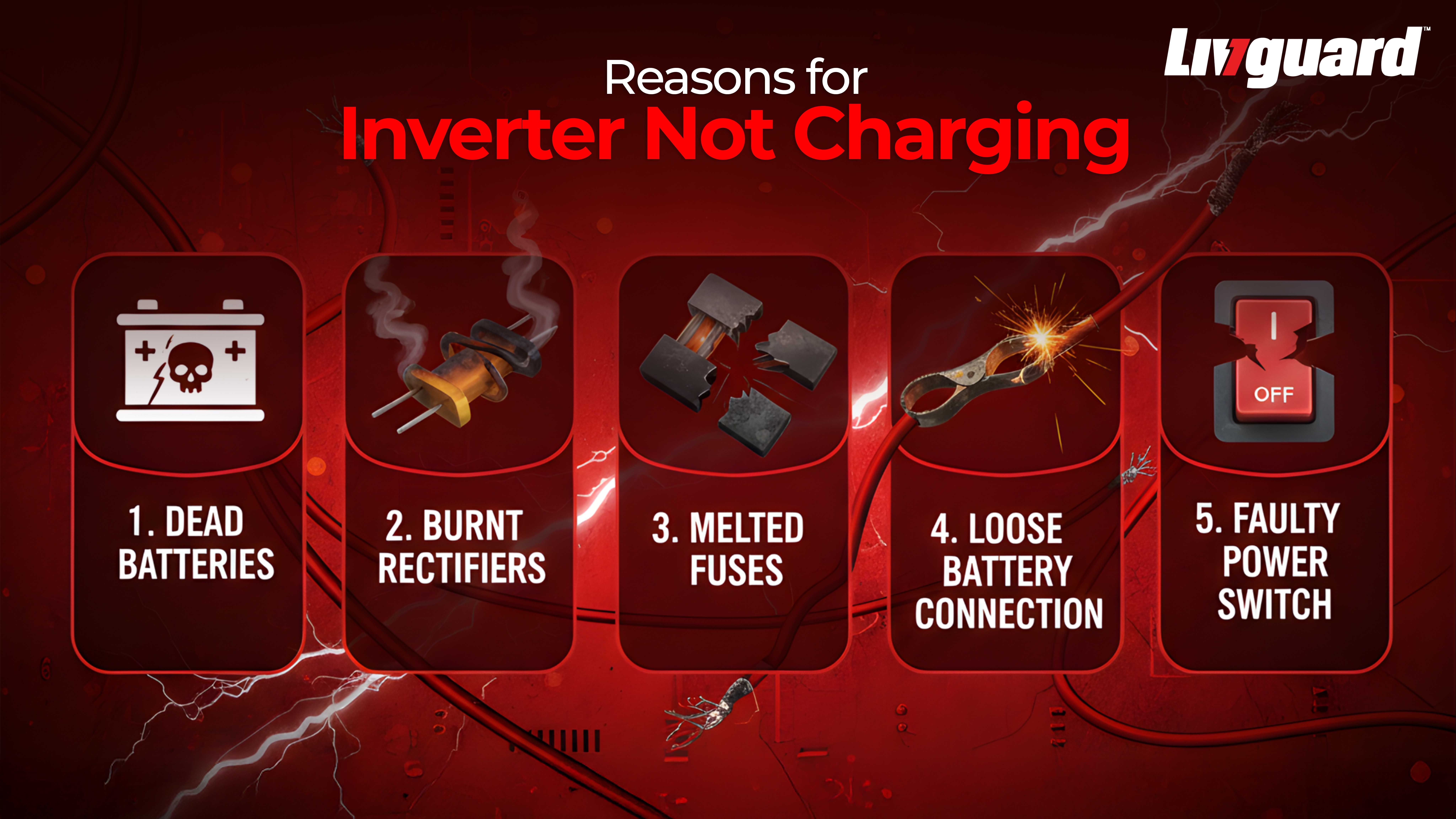
5 Reasons for Inverter Not Charging
Introduction:
One electric thing that is the most neglected in a household is an inverter. We generally forget to look in for its maintenance until we face an issue with its working. Since an inverter converts DC electricity from batteries into AC electricity, the applications they can support are diverse. Thus, it’s obvious that its failure or breakdown can cause interruptions and significant losses. The most common cause of failure of an inverter is an improper installation.
What is the problem if the inverter is not charging?
Dead Batteries:
One of the most common reasons for the inverter not charging is a dead battery. The only solution to this problem is battery replacement. You can easily purchase an inverter battery yourself or can take a professionals’ help in buying one.
Burnt Rectifiers:
Rectifiers are basically step-down transformers that tend to get burnt in some cases. In this case, one needs to get the inverter repaired. This could happen due to improper working of the cooling fan. Also, make sure that the quality and the nature of the internal circuitry are good to avoid problems.
Melted Fuses:
Melted Fuses is one of the reasons for the inverter not working properly. The main cause for blown fuses includes reverse polarity or a short circuit within the appliance. Also, if the inverter is being overheated or used, then also there are chances of the fuse melt or blow off. In such a situation, one needs to disconnect the device and get a new one installed through a professional.
Loose Battery Connection:
Loose battery connections can also be one of the major reasons for the inverter not charging properly or at all. In this case, you must check the battery terminals for corrosion and then clean and clamp them properly. If you think that’s tricky, call in for a professional’s help for the same.
Faulty Power switch:
If your inverter has been malfunctioning, then one of the reasons can be a faulty power switch. This is an easily identifiable and solvable issue when it comes to inverters. All you need to do is unplug the inverter from its usual socket and plug in another device in the same socket. If the device does not power on, then there is a problem with the power switch and not the inverter. You can then plug the inverter into another power switch, and it should work smoothly.
How to check if the inverter is charging the battery?
While understanding the causes of inverter malfunction is essential, it’s just as important to know how to identify whether an inverter is working or not. This is often a question most people have since, in some cases, it can be confusing to know whether your inverter needs repair or not. One tip is to check the voltage of the battery. Do this after 1 hour of charging, and then disconnect the battery from the inverter. If the inverter is working fine, the voltage on the batteries will rise. Another method is to use an amp meter to measure the current passing through the inverter. If the amp meter measures current as 0 then the inverter is not working.
Professional Help and Timely Repair
When your inverter continues causing trouble, you should not attempt to repair it by yourself. It might appear straightforward on the surface, but on the inside, it is a network of circuits and chemical reactions that require the attention of an expert. A trained technician can spot the problem much faster, whether it’s a burnt wire, a weak charger board, or a tired battery.
Here’s why getting inverter battery repair done early actually saves you money in the long run:
- Prevents bigger damage: A small fault today can turn into a dead battery tomorrow.
- Brings life back: Skilled pros can handle inverter battery cell repair and help your battery hold a charge again.
- Keeps things safe: Loose wires or short circuits can easily cause overheating or sparks.
- Protects your warranty coverage: One wrong DIY move can void it instantly.
Moreover, if you’re using a tubular battery, regular care matters even more. Timely tubular battery repair helps it charge better and last longer. Neglecting the maintenance for too long can cause the plates to corrode, or acid may leak out. It is costly to repair later. When it does not feel right, it is better to call a technician sooner than wait until a complete breakdown occurs.
Choosing the Right Replacement: Reliable Inverters and Batteries
In some cases, even repair may not help revive an old system. Batteries discharge and inverters do not become efficient with time. When it does, it is worth investing in a replacement that would last. Never buy the cheap one, but find reliable inverters which can provide consistent power and ensure that your house equipment is safe.
Keep these points in mind while upgrading:
- Choose trusted brands. A reliable pure sine wave inverter runs smoother and keeps sensitive devices safe.
- Match the size right. The inverter battery should handle your usual power load comfortably.
- Check for modern tech. Newer models charge faster and waste less energy.
- Go for easy service. Pick a brand that offers quick doorstep support.
A reliable inverter battery paired with the right inverter won’t just keep your home running. It’ll give you peace of mind every time the lights go out. So if you are struggling with why my inverter is not working despite trying everything, you know what to do now.