Difference Between Sine Wave and Square Wave Inverters
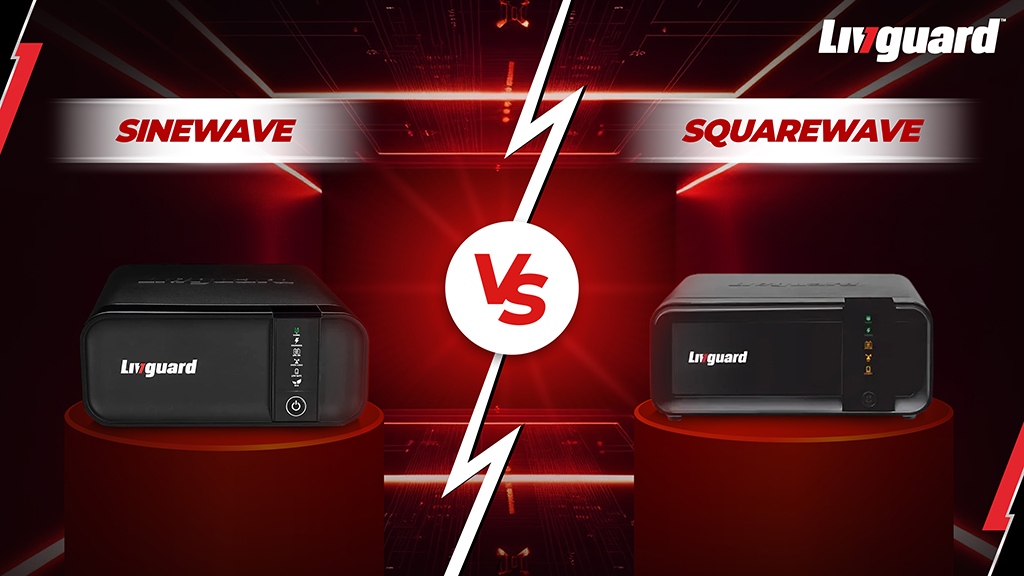
Trying to figure out modern-day electrical gadgets can confuse your brain into spiralling waveforms. However, these innovations have changed the way we live our personal and professional lives. One such life-transforming device is an inverter– the support system behind uninterrupted power allows you to finish your office work, college assignments and trending TV series without the fear of power cuts. A square wave and sine wave inverter are the two major types of inverters in the market. Most people are confused about the difference between these two inverters. The difference lies in waveforms.
In this guide, we will compare sine wave and square wave inverters to help you understand their uses and make an informed choice for your home or office spaces.
Everything About Square Wave Inverters
A square wave inverter is a traditional device that generates an AC output with a 90-degree waveform. The continuous flow of steep rise and right-angle fall in the wave makes it look like a perfect square. They are widely used in heavy-duty applications as they offer a much rougher AC output. It is also ideal for smaller appliances such as fans and light bulbs.
Features of a Square Wave Inverter
These simple yet effective power inverters come with modern-day features that support everyday home usage:
- Pocket-Friendly
These inverters feature a simple design and traditional technology, which makes them easy to design. Compared to the sine wave inverters, they are a budget-friendly option for home and office usage.
- Adaptable to Power Surge
Square wave inverters are compatible with a limited number of appliances but can handle the power surges with ease. It also makes it a great option for appliances that don’t require a smooth power output. Heavy-duty ACs and compressors, which run on motors, can be well-suited to square wave inverters for a safe and long-lasting performance.
Everything About Sine Wave Inverter
A sine wave or pure sine wave inverter transforms DC to an AC output in a similar waveform to that received from the grid. It offers the purest and smoothest output that is suitable for office and home usage. They are suitable for all kinds of electronics, including mobile phones, AC, fans, etc.
Features of Pure Sine Wave Inverter
Here are some key reasons that make sine wave inverters a popular choice for many households:
- High Efficiency
Pure sine wave inverters filter out the DC input to offer clean AC output that ensures the highest efficiency with precise control and voltage. This reduces the energy wastage and your monthly electricity bill. Livguard pure sine wave inverters offer the best results with Livguard tubular batteries.
- Noiseless Operation
The smooth waveforms ensure that there is no ripple or electrical noise that can hinder the process. It also ensures that the whole process is noiseless and ensures a calm working environment. This makes a pure sine wave a great choice for indoor placements.
- Wide Compatibility
The minimal wastage makes this a handy system for most electronics. Livguard sine wave inverters are compatible with most battery types and help improve your battery’s lifespan.
Comparing Pure Sine Wave Inverter VS Square Wave Inverter
The following are the major differences when comparing a sine wave inverter vs square wave inverter for your home:
| Aspect | Sine Wave Inverter | Square Wave Inverter |
| Waveform | Generates a smooth, continuous wave identical to a grid supply | Produces a chopped, stepped wave that is less stable and more noisy |
| Application | Suitable for all types of electronic and electrical appliances | Limited use due to low compatibility with sensitive appliances |
| Efficiency | More efficient as less energy is lost as heat | Lower efficiency due to waveform design |
| Cost | Higher production and purchase costs | Lower cost due to simple design and manufacturing |
| Battery Life | Longer battery life, as less energy is wasted as heat | Shorter battery life due to higher energy loss and potential damage |
| Advanced Features | Fault Detection for Overcharging, Overload and Short Circuit, etc. LED indicator. | Smart AI Charging for longer battery life. Noiseless Operation all day long. |
Sine Wave Inverter vs Square Wave Inverter: What to Buy?
Each home is unique, and Livguard offers a variety of inverters to meet those power needs. While a pure sine wave offers higher efficiency and compatibility, a square wave can be the best option for heavy-duty motor appliances. The sine wave inverter price may seem high at first, but with a longer lifespan and fewer maintenance costs, it can be cost-effective in the long run. When comparing sine wave ups vs square wave, make sure to understand all key features to pick the ideal one for your home.