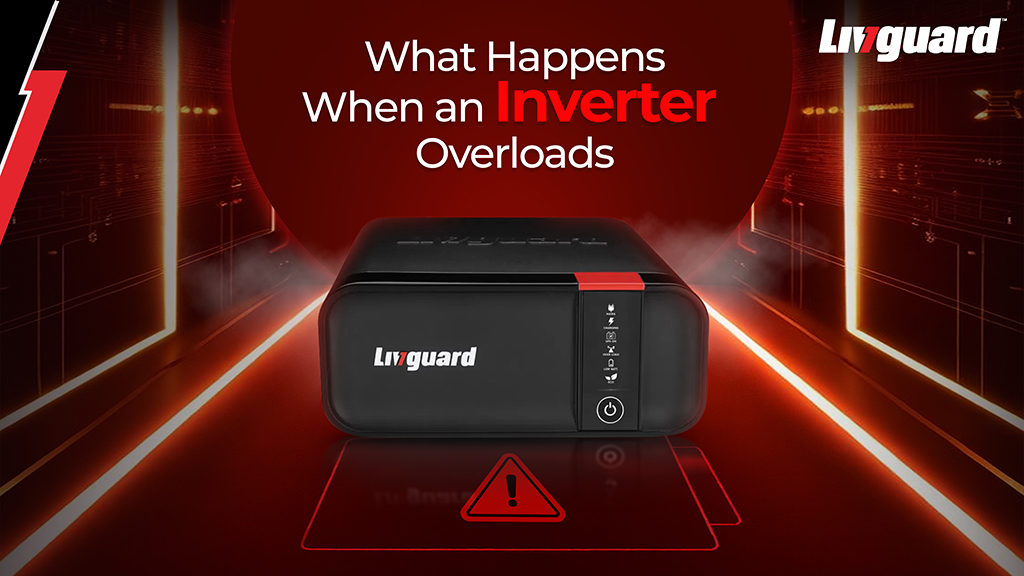
What Happens When an Inverter Overloads
How important an inverter is is something that needs no introduction. They’re the saviours during unforeseen power cuts, and if maintained properly, can last you a good time. But the inverter and the inverter battery have a threat, which you probably weren’t warned about: The inverter overload.
Here at Livguard, the safety of our customers is our topmost priority. Which is why in this article, we’re going to tell you about what inverter overload is, what to do about it, and how you can avoid it in the future. This article is a complete guide on inverter overload, and if you read till the end, you can be saved.
What Does Overloading Mean in an Inverter?
An inverter overload happens when the appliances that are connected to it need more electricity than the inverter can handle. The inverter draws too much current because there is a mismatch between supply and demand. This can cause overheating and damage.
One of the main reasons an inverter overloads is that it is used too much. When the total power used by all the appliances connected to the inverter is more than the inverter’s rated output capability, it happens.
One or more appliances may not work properly in some instances. Because of problems inside, they could suddenly start using too much electricity. This can also lead to circumstances of overload. The state of the inverter’s battery is also important. Batteries that aren’t taken care of or that are broken may not provide enough power.
This kind of situation could make the inverter work harder than normal, which could cause it to overload. An inverter may have certain internal problems, such as broken parts or old firmware. It could also be a flaw in the manufacturing process. In this circumstance, the inverter may mistake typical operating parameters for an overload issue.
Tackling Overload: Immediate Response of a Livguard Inverter
At Livguard, we have some measures in place to warn you about an overload beforehand. They are:
- Audible Alerts & Warnings: Beeps, alarms, flashing lights.
- Automatic Shutdown: Power cut-off to prevent internal damage.
- Overload Attempts: Ability to tolerate multiple overload attempts and peak surges up to 200%.
Built-in Safety Features in Livguard Inverters
Also, here at Livguard, we have integrated certain safeguards to make sure you don’t face any mishap during your usage in case the inverter overloads. Let’s understand with the table below:
| Feature | Function | Benefit to Users |
| Smart Thermal Management | Monitors and regulates internal temperature during overload conditions. | Prevents overheating, extends inverter and battery life. |
| In-built Protection Mechanisms | Shields circuits and batteries from excess current or unsafe operating conditions. | Ensures inverter components and battery remain safe and functional. |
| MCB (Miniature Circuit Breaker) Protection | Trips automatically when excess current flows due to overload or short-circuit. | Provides quick isolation, avoids electrical hazards and potential fire risks. |
| Reliable, Noiseless & Efficient Operation | Maintains performance even during overload handling without unnecessary noise. | Users enjoy uninterrupted backup, minimal disturbance, and energy efficiency. |
Why Overload Protection Matters
Now, the question is, why does overload protection matter so much in the first place? Well, for starters, inverter explosions have been on the news for quite some time, and one of the primary causes is overload. Even if we don’t go to that extreme, your inverter can get severely damaged if the overload happens, and the inverter battery overload, in turn, will damage the electric grid as well.
This simply means that if there is an inverter overload problem, the first victims are going to be your appliances, which could cost you thousands to fix. Regardless, this explains why inverter protection is super important.
What to Do If Your Inverter Overloads
Now, despite all the safeguards, what if your inverter does overload? What should you do in that situation? Follow these steps to ensure 100% safety in case your inverter for home gets overloaded.
Step 1: Identify and reduce the load.
You need to find out what is causing the load in the first place. Is it an appliance? Is it the solar grid? It doesn’t matter; find out the source first, and then shut it off. It should reduce the load a bit.
Step 2: Reset the inverter after removing excess appliances
Once you have reduced the load, reset the inverter. Once done with that, check the load capacity and remove excess appliances. This will ensure that there is no further overload and guarantee safety.
Step 3: Prevent future overloads by matching inverter capacity with load needs
This is more of a preventive measure, but make sure to match the inverter capacity and the load of appliances moving forward. Our Electricity Load Calculator helps with accurate estimations. After all, prevention is better than a cure.
Conclusion
Inverter overload is a problem that can have drastic consequences if not dealt with properly. Livguard inverters have indicators in place to ensure that overload is detected early, while features enable it to withstand overload. If you follow the steps mentioned above, your appliances are likely to be safe despite overloads.