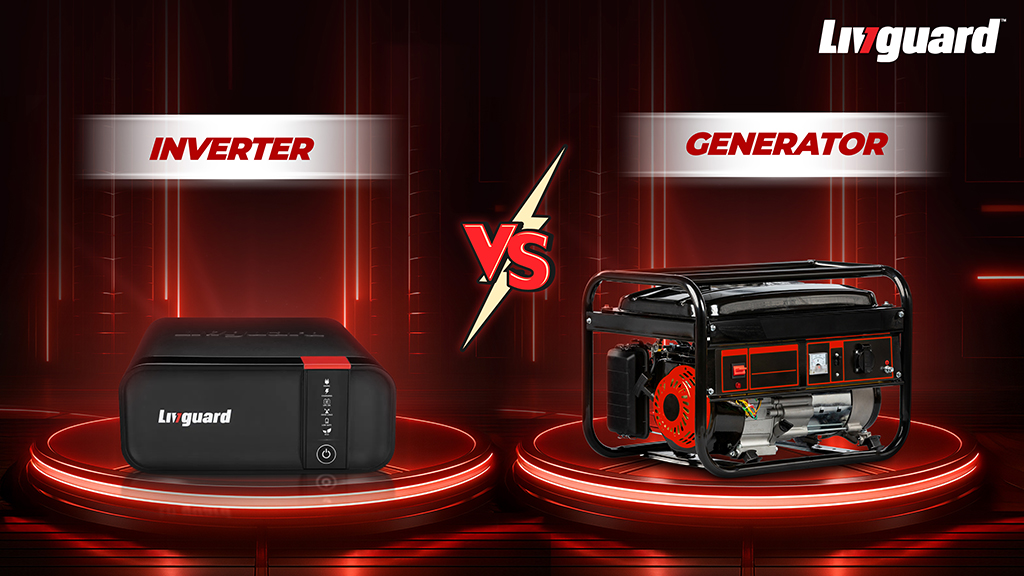
Difference Between a Generator and an Inverter
Imagine the fans stop, the lights go out, the appliances shut off, and work comes to a standstill. Yes, power outages can throw your life and routine off balance. Here, a reliable power backup is a must-have for convenience and comfort.
If you’re unsure about inverter vs generator, you’re not alone. Many people struggle to decide which option suits their needs best. Generators are favored for heavy power requirements, while inverters are preferred for silent, efficient, and eco-friendly operation. You may ask what is an inverter generator? It refers to a modern hybrid technology that combines portability with cleaner, more stable power output.
This blog goes deep into the key difference between generator and inverter to help you find the right choice for your home or office. So, scroll down and make informed decisions for your energy and lifestyle needs.
Power Source and Working Mechanism
Generator: An operation based on mechanical energy, a generator is powered with the help of fuels like petrol, diesel or natural gas. The process drives the engine to transform mechanical energy into electrical energy, sending the power supply as soon as the engine starts running.
Inverter: An inverter battery, conversely, works electronically. It does not produce electricity but stores it. The inverter is used to convert DC (Direct Current) from the battery into AC (Alternating Current), which supplies power to the house appliances during an outage. The inverter will charge the battery automatically when the main power supply comes back on.
Fuel vs Stored Energy
Generator: A dependency on fuel. The efficiency of the generator is connected to the fuel supply. The generator will cease generating power when fuel is depleted. Regular refuelling and fuel storage prove to be inconveniencing and even expensive to do, particularly in regions where outages are frequent.
Inverter: An operation with a stored electrical energy, an inverter provides power without the need for any external fuel. This is more convenient in domestic use since it operates without emissions and without noise. The backup time? It is dependent on battery capacity and load.
Noise and Operation
Generator: Noisy is nature; generators are famous for that. The noise of the engine, especially the diesel versions, is loud and distracting. Although there are current-day generators that include soundproofing, they can still be loud relative to an inverter.
Inverter: The good part? The inverter batteries provide noiseless operation. They do not have any moving parts or combustion process, thus they can be used indoors and outdoors. The fact that they operate quietly is one of the key reasons behind their popularity among homes, small offices, and shops.
Maintenance Requirements
Generator: This power backup solution demands regular maintenance. Checking of oil levels, upkeep of fuel systems, cleaning filters, and review of spark plugs – everything ensures safe use and optimal performance. Also, poor maintenance will lower the efficiency in no time, causing expensive repairs or replacements.
Inverter: A power backup solution known for low-maintenance systems. Thinking about the routine maintenance procedure? From monitoring water levels, primarily with lead-acid batteries, to cleaning terminals and ensuring proper ventilation. This also means that they are less expensive and simpler to maintain, as there is no combustion engine.
Power Capacity and Load Handling
Generator: When talking about power capacity, generators are always at an advantage. They come in a broad variety of sizes, including small mobile versions used domestically to large industrial sizes that can operate whole factories.
Inverter: Best suited for moderate power requirements, inverters are efficiently able to operate appliances like fans, lights, televisions, routers, and small kitchen gadgets. However, they may not be able to sustain heavy devices such as air conditioners, refrigerators or water pumps unless they are connected to large capacity batteries and powerful inverters.
Cost and Long-Term Investment
Generators: The price of a generator may vary with the size and the type of fuel used. Generally petrol generators are cheaper but more expensive to run whereas diesel variants are expensive in the short run but less expensive in the long run.
Inverters: The initial cost of an inverter battery system is usually moderate. The price varies according to the inverter capacity, the type of battery (lead-acid or lithium-ion) and brand. The running cost is low as it does not consume any fuel, however, after a few years the batteries also require replacement.
Environmental Impact
Generators: Environment friendliness truly makes a lot of difference. Combustion of fuel by generators releases carbon monoxide, carbon dioxide and other pollutants, which lead to air and noise pollution. A long-term use of generators also leads to an increase in carbon footprint and fuel consumption.
Inverters: Greener and sustainable in nature – inverters do not emit emissions or cause noise pollution. With lithium-ion batteries, modern inverter systems are more environmentally friendly. The result? They deliver greater efficiency and extended lifespan without the production of any harmful by-products.
Response Time During Power Cuts
Generators: The generator has to be started manually, except when it has an automatic switch-on and off feature. There is likely a brief delay between the power cut and the generator starting.
Inverters: An inverter battery works automatically and instantly. When power goes off, it automatically goes to battery mode without any human intervention and maintains a continuous power supply. This makes it suitable for sensitive electronic appliances like a computer, router or a medical device that a temporary power interruption would otherwise impact.
Space and Installation
Generator: Small or big? All generators require a lot of space to install. They should be stored outside or in a well-ventilated place to avoid the build-up of exhaust fumes. Storage of fuel also needs extra space and precautions.
Inverter: Small in size – inverters are great for installing indoors. No large space is required, and can be easily placed in a corner or under a table. Good battery ventilation is the only requirement, making inverters a more cost-effective solution in homes and apartments with small spaces.
Conclusion
When comparing inverter vs generator, both offer reliable solutions during power outages, but they serve different needs. Generators are better suited for heavy loads and extended outages, while inverters stand out for being quiet, eco-friendly, and ideal for everyday home use. Understanding your lifestyle, energy consumption, and budget will help you decide which option fits you best. For high-performance, modern home backup solutions, explore our range of smart inverters equipped with power-cut predictors, running load indicators, estimated backup time, and user-friendly LCD displays.