9 Timeless Tips To Make Your Home Inverter Last Longer
| Sr. No. | Table of Contents |
|---|---|
| 1 | Understanding the Common Causes of Inverter Degradation |
| 2 | The Takeaway |
Traditionally, people used generators as a source of electricity backup in the event of any unforeseen power cut. However, as technology progresses every day, numerous electricity backup sources are available at your disposal.
The most common and efficient backup option is a home inverter, which is not only more convenient but also supports nearly every household appliance. Although inverter batteries require very little maintenance, it is generally a good idea to upkeep them for longevity.
If you’re looking for ways to extend the life of your inverter and ensure a better power output, make sure you keep reading. Here’s a rundown of tips that help you take care of your home inverter and sustain its work-life:
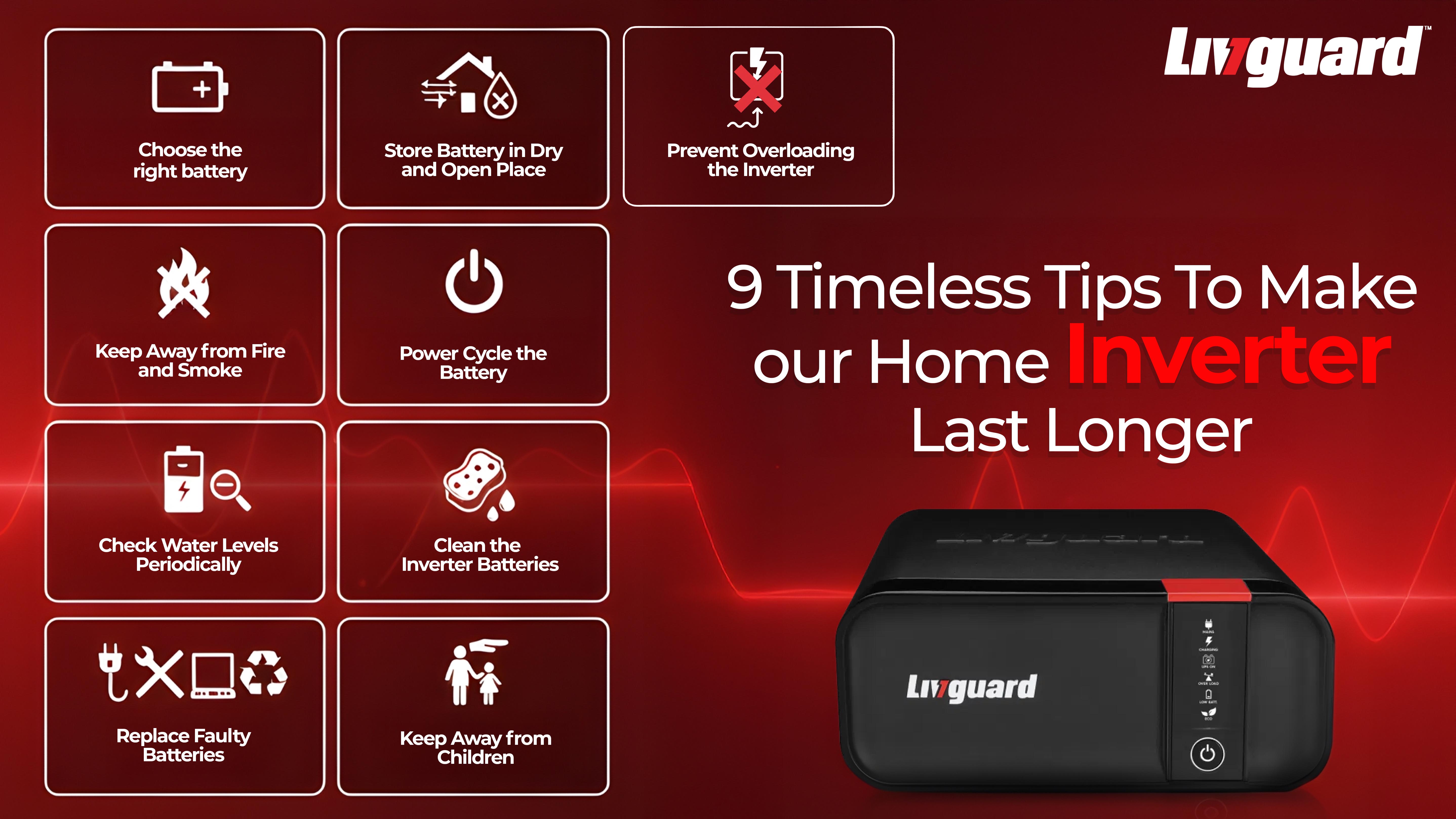
1. Choose the right battery:
Depending on the electricity backup requirements of your home, you need to choose a good inverter battery for your home as it’s one of the most essential components of a home inverter. While choosing a battery, make sure you assess its Ampere-Hour capacity based on your requirements.
2. Store Battery in Dry and Open Place:
Inverter batteries produce a significant amount of power that makes them heat up while being used or charged. That’s why it is essential to store them in a dry and spacious area to make sure that the heat propagates properly and prevents the inverter from getting damaged.
3. Power Cycle the Battery:
It is essential to regularly use your home inverter to ensure the longevity of its battery life. If you don’t encounter power cuts at your home, you should consider power cycling the inverter every month by discharging it completely and recharge it again.
4. Keep Away from Fire and Smoke:
Always ensure that your inverter battery for home is stored in a safe place, away from uneven temperature conditions, fire, or smoke. Failure to do so can lead to permanent damage to the device and may also cause sparks that could give rise to several safety hazards.
5. Check Water Levels Periodically:
Make sure you check the water levels of your home inverter every two months. It is necessary to keep the water levels between the minimum and maximum limit to ensure the proper functioning of your inverter and generate maximum output through it.
6. Clean the Inverter Batteries:
Using a piece of cotton or cloth, you should clean the sideways and surface of your inverter’s battery and remove any dust from it. Before cleaning the battery, make sure you’ve disconnected it from the inverter and taken necessary precautions. You can also apply petroleum jelly on terminals to prevent corrosion.
7. Prevent Overloading the Inverter:
Ensure that you know the maximum capacity of your home inverter and make sure you never overload it to prevent damage. To reduce the load on your inverter, you should consider unplugging the appliances not being used.
8. Replace Faulty Batteries:
If you feel that your inverter’s battery for home is discharging faster than usual, never attempt to use it anymore as it can lead to several dangerous circumstances. Make sure you replace faulty batteries as soon as possible and never combine faulty and working batteries together.
9. Keep Away from Children:
Young children consider everything as a toy and never shy away from tweaking things. If you install a home inverter in a place where children can easily reach it, be prepared to witness food and liquid spills on it. This may lead to permanent damage to the unit which makes it pretty useless.
Understanding the Common Causes of Inverter Degradation
Before you worry about the inverter lifespan, it helps to know what can quietly wear it down. The common reasons for inverter failure are:
1. Poor Installation: Location Really Matters
Inverters aren’t fans of cramped corners or baking in the sun. Mounting them in tight spots or near heat sources blocks airflow and speeds up wear. Give your inverter a proper home. Follow manufacturer guidelines and avoid “convenient” DIY setups that can backfire.
2. Overheating: Keep It Cool
Heat is an inverter’s kryptonite. How temperature affects inverter performance? High ambient temperatures can cause components to overheat. And there is more! Running heavy loads for long periods as well as poor ventilation can overheat components. These can end up reducing lifespan. A well-ventilated spot is a happy spot.
3. Electrical Fluctuations: Power Surges Bite
Frequent voltage spikes or dips stress the internal circuits. It’s like giving your inverter mini heart attacks that can be stressful and potentially damaging. Surge protectors or stabilisers can help keep it calm and steady and help with inverter lifespan.
4. Overloading: Don’t Ask Too Much
Every inverter has a rated capacity. Pushing it beyond that? Expect it to sweat. Inverter degradation due to overloading leads to extra heat and stress on components. Keep appliance loads in check, and your inverter will thank you.
5. Lack of Maintenance: Out of Sight, Out of Mind
Dust and loose connections- Not at all! Also, the outdated firmware silently degrades performance, too. Regular check-ups, cleaning, and updates keep your inverter running efficiently and prevent nasty surprises.
The Takeaway
If you witness power cuts very often in your locality, you must have an inverter installed at your home. It not only acts as a power backup but also supports nearly all household appliances, which makes them better than traditional power backup solutions like generators.
However, to make sure that your inverter lasts for a long time and serves a better power output, you need to take good care of it and maintain it periodically. By simply following some easy measures, you can ensure the good longevity of your home inverter.
Therefore, make sure you keep the tips stated above in mind to make the most out of your inverter. As a general rule of thumb, keep their batteries away from heat, smoke, and tight spaces. Moreover, power-cycle the device regularly and clean it periodically as well.